Don’t Break the Bank Finding Your Perfect Cheap Pool Membership

Finding Affordable Pool Access Without Draining Your Wallet

Cheap pool membership near me searches spike every summer as families look for ways to beat the heat without breaking the bank. The good news? Affordable pool access exists in nearly every community—you just need to know where to look.

Quick Answer: Where to Find Affordable Pool Access

  1. Public Recreation Centers – Drop-in rates from $3-$10 per visit
  2. Community Swim Clubs – Summer family passes around $300-$400
  3. Municipal Pools – Resident monthly memberships starting at $22
  4. Punch Passes – 12-visit passes for approximately $70 (best for occasional swimmers)
  5. Senior Programs – Free or heavily discounted options for residents 55+
  6. Neighborhood/HOA Pools – Often included in HOA dues or available at reduced rates

As one parent shared in a community forum: “I may not have read all the replies, but…have you asked the kids what they would love to do this summer?” That question captures the reality many families face—wanting to provide summer fun without the financial stress.

The cost of pool access varies dramatically based on your location, residency status, and membership type. Daily admission can range from $3 for children at public pools to $20+ for non-residents. Monthly memberships span from $22 for residents to $60+ for premium facilities. One-time initiation fees can add another $200-$700 to your first-year costs.

But here’s what many people don’t realize: cheap doesn’t mean low-quality. Public recreation centers, community swim clubs, and municipal pools often offer the same amenities as expensive private clubs—lap lanes, splash pads, fitness classes, and social events—at a fraction of the cost.

The key is understanding your options and matching them to your family’s needs.
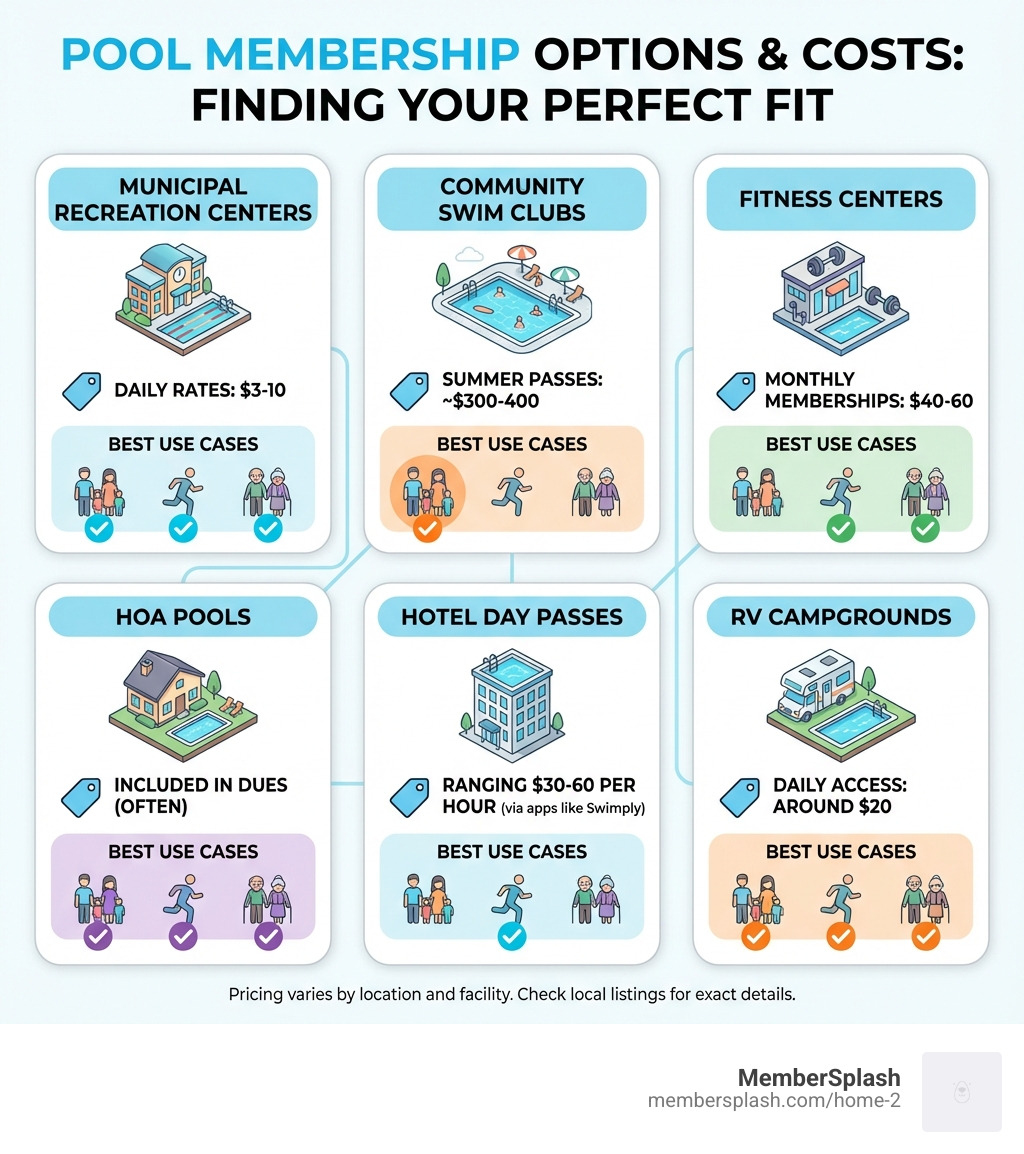
Infographic showing the different types of facilities that offer pool memberships including municipal recreation centers with daily rates of $3-10, community swim clubs with summer passes around $300-400, fitness centers with monthly memberships from $40-60, HOA pools often included in dues, hotel day passes ranging $30-60 per hour through services like Swimply, and RV campgrounds with daily access around $20, each with their typical pricing structure and best use cases for families, individuals, and seniors - cheap pool membership near me infographic

Understanding Pool Membership Types and Costs

When we set out to find a cheap pool membership near me, it’s easy to get overwhelmed by the sheer variety of options and pricing structures. But don’t worry, we’re here to help you steer the waters! Understanding the different types of memberships available is the first step to making an informed decision that suits your budget and lifestyle. From quick dips to year-round swimming, there’s a membership designed for almost every need.
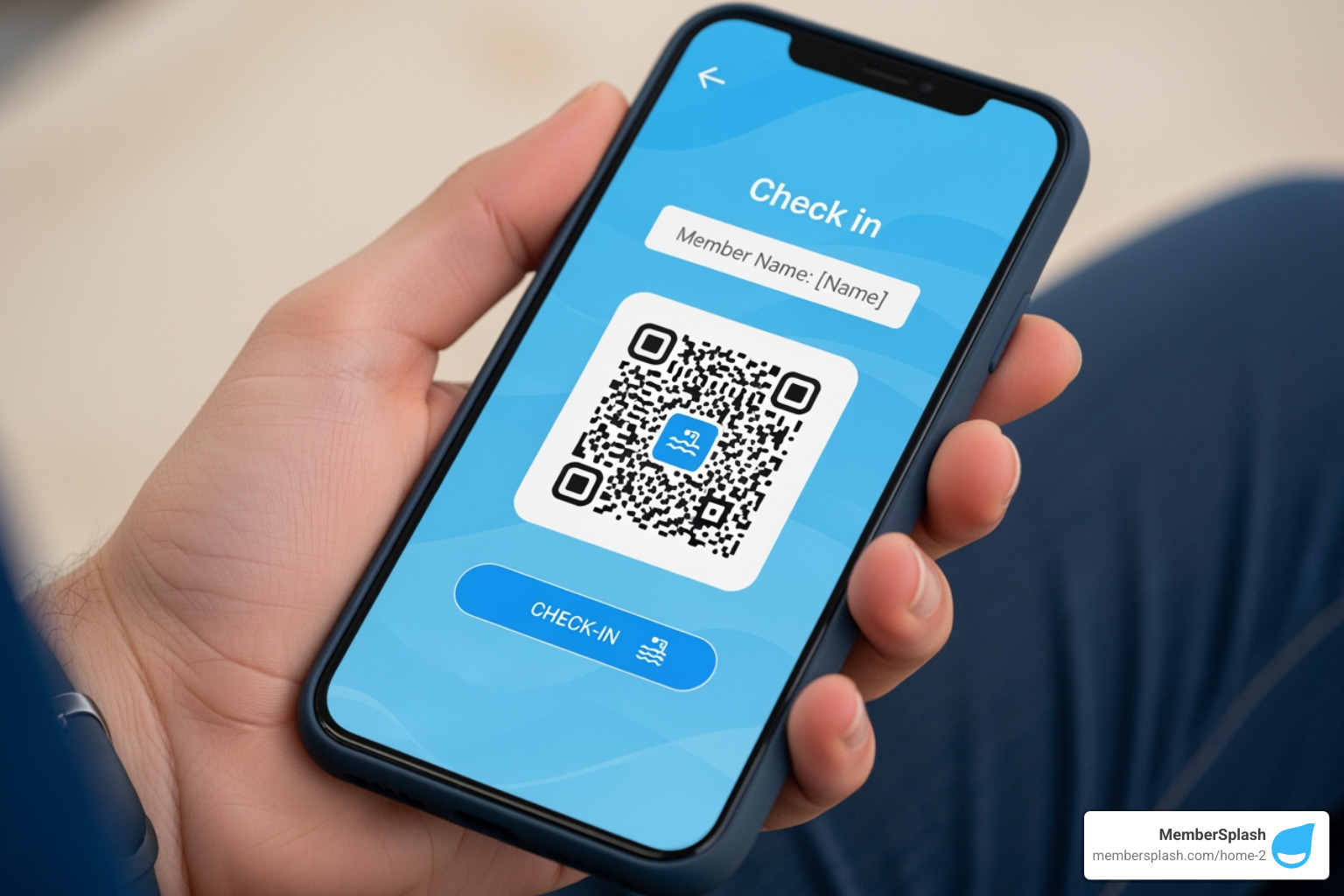
a membership card or a digital check-in screen on a phone - cheap pool membership near me

Membership options generally break down into daily, monthly, seasonal, and annual plans, each with its own cost implications. Beyond the sticker price, we also need to consider individual vs. family plans and any age-specific discounts that might apply. And let’s not forget those sneaky hidden fees – we’ll shine a light on those too!

Decoding the Different Membership Tiers

Let’s explore the common membership tiers you’ll encounter when searching for affordable pool access:

  • Daily Passes/Drop-in Rates: These are perfect for those spontaneous swim days or when you’re just testing the waters (pun intended!). Drop-in rates typically range from $3 to $10 for residents and can go up to $20 for non-residents, depending on the facility and age group. For example, some public pools might charge $5 for adults and $3 for children. This is the most flexible option, allowing you to pay only when you use the pool.
  • Punch Passes: If you love swimming but don’t commit to a regular schedule, punch passes are your best friend. These offer a set number of visits (e.g., 10 or 12) at a discounted per-visit rate compared to daily passes. In Montgomery County, MD, for instance, a 12-admission punch pass for adults (18+) is $70 for county residents. This means you’re paying roughly $5.83 per visit, which is a great deal if you plan to use it a dozen times. Punch passes generally don’t expire, offering excellent value for occasional swimmers.
  • Monthly Memberships: For those who want more regular access without a long-term commitment, monthly memberships are a popular choice. These often range from $22 to $60 for individuals, with pricing varying based on residency and facility type. They offer the flexibility to cancel if your circumstances change, though some may have a minimum commitment period or cancellation fees.
  • Seasonal/Summer Passes: When the sun is out and the heat is on, a seasonal pass (especially a summer pass) is a fantastic option. These typically cover a few months of unlimited access and are particularly popular with families. We’ve seen family summer passes range from $300 to $400 for the entire season. This is ideal for maximizing pool time during peak months.
  • Annual Memberships: For year-round swimmers or dedicated fitness enthusiasts, an annual membership provides the most comprehensive access and often the best per-month value. These can vary significantly, with individual annual passes in Montgomery County, MD costing around $400 for residents and $460 for non-residents. This option is great if you plan to make swimming a regular part of your routine throughout the year.

No matter which tier you choose, having a seamless way to manage your account and track your visits is key. Our platform helps facilities manage all these diverse options efficiently. You can learn more about how we help with managing member accounts.

Individual vs. Family: What’s the Best Value?

This is a common question for households, and the answer is almost always: family memberships offer better value. While individual memberships are straightforward, a family plan typically provides a significant discount compared to purchasing separate memberships for each family member.

Consider a scenario where Montgomery County, MD offers an “All Pool Pass” for individuals at $400 for a year (resident rate). A family pass, covering two adults and up to eight children, is $550 for a year. If you have two adults and two children, purchasing individual passes would cost $1600 (4 x $400), whereas the family pass saves you a whopping $1050! Even with additional member fees for larger families, the family plan is almost always the more economical choice.

Beyond the cost savings, family memberships foster shared activities and create lasting memories. They encourage everyone to be active together, turning pool time into quality family time.

Watch Out for Hidden Fees and Initiation Costs

Ah, the dreaded hidden fees! These can quickly turn a seemingly cheap pool membership near me into a budget-buster. When researching, always ask about:

  • One-time Membership Fees/Initiation Fees: These are upfront costs paid when you first join. They can range from $200 to $700 at some private clubs. While public facilities usually have lower or no initiation fees, it’s crucial to confirm.
  • Enrollment Fees: Similar to initiation fees, these are one-time charges, often ranging from $25 to $75, for processing your membership.
  • Equipment Rental: If you forget your towel or goggles, some facilities might charge for rentals.
  • Locker Fees: While many offer free day-use lockers, some might charge for permanent lockers or require coins for use.
  • Cancellation Penalties: Be sure to understand the terms for canceling a monthly or annual membership. Some may charge a fee if you cancel before a certain period.

Always read the fine print or ask directly about all associated costs before committing. Transparency in pricing is something we deeply value, and our online payment processing solutions aim to make all costs clear upfront for members. Learn more about online payment processing.

How to Find a Cheap Pool Membership Near Me

Finding an affordable pool membership doesn’t have to feel like finding a needle in a haystack. With a few smart search strategies and a willingness to explore different types of facilities, you’ll be splashing around in no time. The key is to think locally and consider all the options your community might offer.

a person searching on their phone with a map interface showing local pools - cheap pool membership near me

Start with Public and Community-Run Facilities

Our first recommendation for finding a cheap pool membership near me is always to check out your local public and community-run facilities. These are often the most budget-friendly options and provide excellent value.

  • Municipal Recreation Centers & County Pools: Your city or county Parks and Recreation department is a treasure trove of affordable aquatic options. Facilities like those in Montgomery County, MD, offer a wide array of passes custom to residents. For example, Montgomery County, MD, provides an ‘All Pool Pass’ for county residents, with various options including individual, pair, senior, and family annual passes, as well as 12-admission punch passes. A 12-admission punch pass for adults (18+) is $70 for county residents, compared to $200 for non-residents. This highlights a significant saving for local taxpayers. They also offer ‘Summer Swim Passes’ with resident discounts. These public pools are designed to serve the community, making them accessible and affordable. The Arundel Olympic Swim Center in Annapolis, MD, is another example of a public facility that offers aquatic programs and access.
  • Parks and Recreation Departments: These departments often manage multiple pools and offer diverse programming, from lap swimming to water aerobics and open swim times. Always check their websites or call directly for the most up-to-date pricing and schedules.

While we focus on our local areas like Annapolis and Baltimore, it’s helpful to see how other cities structure their offerings. You can find an example of a city’s offerings here. This shows that many public systems prioritize accessibility through tiered pricing and discounts.

Explore Neighborhood and HOA Pools

Many communities, especially those with Homeowners Associations (HOAs), have dedicated neighborhood pools or private swim clubs that offer memberships. These can be fantastic options, often providing a strong sense of community and well-maintained facilities.

  • Homeowners Association Pools: If you live in an HOA, pool access might be included in your monthly or annual dues, or available at a significantly reduced rate exclusively for residents. These pools are usually well-maintained and offer a convenient, family-friendly environment close to home.
  • Neighborhood Swim Clubs: These are often member-owned or privately run clubs that cater to a specific local area. They often have a strong community feel, with social events and activities for all ages. While they might be slightly pricier than public pools, they can offer a more intimate setting and often have summer-only family membership options, like family memberships for the whole summer around $400. This makes them a competitive choice for seasonal fun.

For HOAs and property managers looking to streamline their pool operations and membership management, our solutions can be incredibly helpful. Find more about HOA property management.

Consider Alternative and Niche Options

Sometimes, thinking outside the box can lead you to an unexpectedly cheap pool membership near me.

  • University and College Pools: Many universities and colleges open their aquatic facilities to the public, often at competitive rates. These pools are usually top-notch, featuring Olympic-sized lanes and excellent amenities, especially during off-peak academic seasons.
  • Hotel Pool Day Passes: Believe it or not, some hotels offer day passes or even local memberships to their pools. This can be a great way to access a resort-style pool without the overnight stay. As one forum user mentioned, hotel pool memberships can be a “great deal,” especially if they include amenities like provided towels and indoor heated pools. You might need to inquire directly, as these aren’t always widely advertised.
  • YMCA/YWCA: These community-focused organizations are renowned for their affordable memberships, which often include access to pools, fitness centers, and various classes. They offer a sliding scale fee structure based on income, making them highly accessible to many families.
  • Swimply Private Pool Rentals: This unique platform, often dubbed the “Airbnb for pools,” allows you to rent private pools by the hour. While not a “membership” in the traditional sense, it offers a flexible and private option, with rentals typically ranging from $30-$60 per hour. It’s perfect for a special occasion or when you want a pool all to yourself without the long-term commitment.
  • RV Campgrounds with Pool Access: Some RV campgrounds, even if you’re not camping, offer daily pool access to the public. While often seasonal, these can be surprisingly affordable, sometimes around $20 per person for a full day.

Opening up Special Discounts and Financial Aid

Finding a cheap pool membership near me isn’t just about comparing base prices; it’s also about strategically uncovering and utilizing discounts and financial assistance programs. Many facilities want to ensure their pools are accessible to everyone, and they offer various programs to help make that a reality.

How to find a cheap pool membership near me with resident discounts

Residency is often the golden ticket to significant savings at public and community facilities.

  • Local Resident Pricing: As we’ve seen with Montgomery County, MD, residents almost always pay substantially less than non-residents. An “All Pool Pass” 12-admission punch pass for an adult is $70 for a county resident but $200 for a non-resident. This is a common practice across the United States. Always be prepared to show proof of residency, such as a driver’s license or utility bill.
  • City Employee Discounts: If you or a family member work for the city or county, inquire about employee discounts. These are often available for recreation center memberships, including pool access.
  • Specific Zip Code Deals: While we don’t have specific examples for Annapolis or Baltimore in our research, some municipalities offer special discounts to residents of particular zip codes, often in areas identified for community support. It’s worth asking if your local facility has such programs.

Age-Specific Savings: Youth and Senior Programs

Age can also be a significant factor in reducing membership costs.

  • Senior Discounts (55+ or 60+): Many facilities offer reduced rates for seniors. In Montgomery County, MD, a 12-admission punch pass for seniors (55+) is $60 for residents, compared to $70 for general adults. Some programs might even offer free memberships, like the “MY Denver Prime” program (an example from outside our focus region, but illustrates the type of program to look for) which provides free access for residents aged 60 and up to recreation centers and pools. Always ask about senior rates and any specific age requirements.
  • Youth Passes: Children and teens often qualify for discounted rates or specific youth passes. For example, a 12-admission punch pass for youth under 18 in Montgomery County, MD, is $50 for residents. These programs encourage healthy activity from a young age.
  • Student Rates: If you’re a student, check if local pools or recreation centers offer special student pricing.

Financial Assistance and Low-Income Programs

Access to recreation shouldn’t be limited by income. Many organizations and municipalities offer financial assistance to ensure everyone can enjoy their facilities.

  • City-Sponsored Financial Aid: Many Parks and Recreation departments have programs to assist low-income individuals and families. These might involve sliding scale fees based on household income or direct financial aid.
  • Nonprofit Partnerships: Organizations like the YMCA often partner with local charities or foundations to provide subsidized memberships. They may also have their own financial assistance programs.
  • How to Apply for Assistance: Typically, you’ll need to fill out an application and provide documentation of your household income. Don’t be shy about inquiring; these programs are there to help!

What to Expect From Your Membership

Once you’ve found a cheap pool membership near me that fits your budget, it’s important to know what you’re getting. A membership isn’t just about gaining entry; it’s about the amenities, the rules, the schedule, and the overall experience that contributes to your well-being and community connection.

Amenities Included with Your Pass

The amenities can significantly improve your pool experience and the overall value of your membership. When comparing options, consider what’s included:

  • Pool Access: Of course! But clarify if it’s an indoor or outdoor pool, heated, and what size (e.g., six-lane, 25-yard indoor, heated pool).
  • Lap Swimming Lanes: Essential for fitness swimmers. Check for dedicated lap times.
  • Open/Recreational Swim: For general enjoyment and family fun.
  • Fitness Classes & Water Aerobics: Many memberships include access to land-based and aquatic fitness classes, providing an excellent way to diversify your workout routine.
  • Locker Rooms: Basic necessity, but check for cleanliness and amenities like showers.
  • Family-Friendly Features: For those with kids, look for splash pads, water slides, kiddie pools, and even lazy rivers. Some facilities offer a “mini kids’ waterpark” experience.
  • Additional Facilities: Some recreation centers include access to gyms, basketball courts, and indoor tracks, offering a comprehensive fitness solution.

The more amenities included, the greater the value for your money. To ensure you can always make the most of these, facilities often use reservation systems for popular amenities or classes. Learn more about reservation systems.

Pool Hours, Rules, and Guest Policies

No matter how cheap the membership, it’s useless if you can’t use it! Always verify these practical details:

  • Operating Hours: Check daily opening and closing times, and be aware of any variations for weekends, holidays, or specific programs (e.g., early morning lap swim). Some pools might have seasonal hours, especially outdoor facilities.
  • Seasonal Availability: Outdoor pools are typically seasonal, usually open from Memorial Day to Labor Day. Indoor pools offer year-round access.
  • Pool Rules: Familiarize yourself with the rules. Common ones include requirements for swim pants for toddlers (often plastic-lined with elastic around the legs and waist), restrictions on flotation devices (often requiring US Coast Guard approval), and supervision requirements for children.
  • Age Restrictions: Be aware of minimum age requirements for unchaperoned swimming or access to certain areas (e.g., fitness rooms, adult-only swim times).
  • Guest Policies and Fees: If you plan to bring friends or family who aren’t members, understand the guest policy. Are guests allowed? Is there a fee? How many guests can you bring? Our systems help clubs keep track of guest tracking efficiently.

Cancellation Policies and Membership Benefits

Understanding the administrative side of your membership is just as important as knowing the pool rules.

  • Cancellation Policies: For monthly memberships, clarify the notice period required for cancellation and if any fees apply. Annual memberships usually require a longer commitment and may not be refundable, or only partially refundable under specific circumstances. Always ask about the terms before you sign up.
  • Community Building & Social Events: A pool membership offers more than just swimming. It’s a hub for community. Many clubs organize social events, holiday parties, and even swim teams, fostering connections and a sense of belonging. Check the facility’s events calendar to see what’s happening.
  • Health Benefits of Swimming: Let’s not forget the core benefit! Swimming is a fantastic full-body workout. It’s low-impact, great for cardiovascular health, and can significantly improve overall wellness. Studies show that even 15-30 minutes in a sauna (often an included amenity) three to four times a week can boost wellness. Swimming can help raise HDL levels (good cholesterol), aiding in the fight against heart disease. It’s not just fun; it’s good for you!

Frequently Asked Questions about Pool Memberships

How much should I expect to pay for a cheap pool membership?

The cost of a cheap pool membership near me varies significantly based on your location, residency, and the type of facility. Daily passes can be as low as $3-$5 for children at public pools, while adults might pay $7-$10. Punch passes for 12 visits often cost around $70 for residents. Monthly memberships typically range from $22 for residents to $60 or more for comprehensive access. If you’re looking for a seasonal option, a family summer pass can be found for $300-$500. Always inquire about one-time initiation or enrollment fees, which can add $25-$700 to your initial cost.

Is a family membership more cost-effective than individual ones?

Generally, yes, a family membership is significantly more cost-effective than purchasing individual memberships for each family member. Most facilities structure family plans to provide substantial savings per person, especially for households with multiple children. For instance, in Montgomery County, MD, a family “All Pool Pass” for a year is $550 for residents, whereas four individual passes would cost $1600. The more people in your family, the greater the savings a family plan typically offers.

What is the best way to find a cheap pool membership near me?

The best approach is a multi-pronged search:

  1. Start with Public Facilities: Contact your city or county Parks and Recreation department. They manage municipal pools and recreation centers that often have the most affordable rates, especially for residents.
  2. Explore Community Centers & YMCAs: These organizations are known for their community focus and often offer tiered pricing, financial assistance, and a wide range of amenities beyond just swimming.
  3. Check Neighborhood & HOA Pools: If you live in an HOA, pool access might be included or heavily discounted. Neighboring communities might also have swim clubs open to non-residents at reasonable rates.
  4. Inquire About Discounts: Always ask about resident discounts, senior rates (55+ or 60+), youth passes, student discounts, and any financial assistance programs.

Be prepared to compare prices, amenities, and policies to find the best fit for your needs and budget.

Conclusion

Finding an affordable pool membership is entirely possible with a bit of research and knowing where to look. We’ve seen that by exploring public facilities, community clubs, and even alternative options, you can secure a cheap pool membership near me that provides incredible value. Whether you opt for a flexible punch pass, a summer-long family membership, or a year-round commitment, considering your usage patterns is key to choosing between daily, monthly, seasonal, or annual passes.

Remember to always look beyond the initial price tag, factoring in hidden fees, available amenities, and the convenience of location. The right pool membership offers not just a place to swim, but a hub for fitness, family fun, and community connection.

For swim clubs, HOAs, and pool management companies, streamlining operations and offering diverse, accessible membership options is crucial. That’s where we come in. MemberSplash helps clubs manage complex pricing, handle online payments, and improve the member experience, making it easier to provide the affordable and enjoyable pool access your community deserves.

Ready to make your pool operations as smooth as a freshly skimmed surface? Find the right management solution for your club.

Navigating the Club Waitlist: What to Expect When You’re Expecting a Membership

The Unprecedented Rise of Country Club Waitlists

Country club waitlist times have exploded in the post-pandemic era, with nearly half of all private clubs now maintaining waitlists compared to just a quarter before COVID-19. For club managers and board members, this surge represents both an opportunity and a significant operational challenge.

Key Facts About Country Club Waitlists:

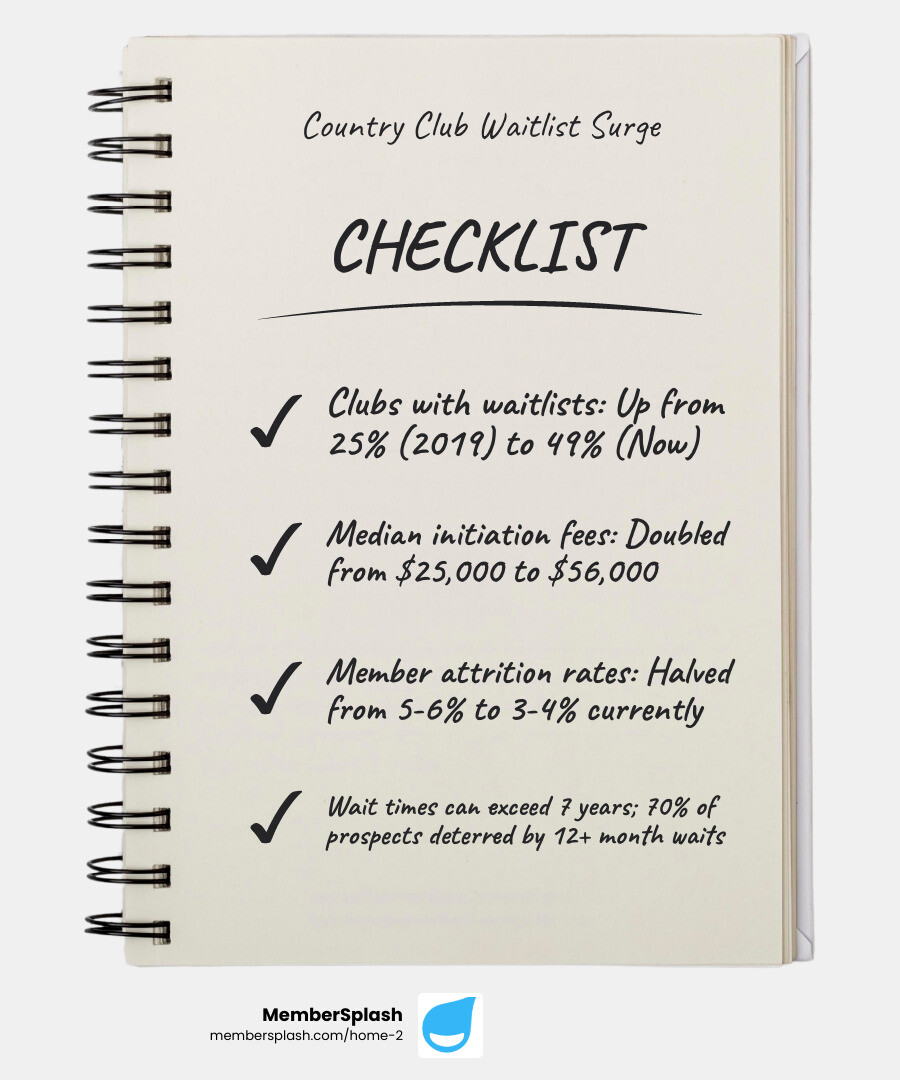
  • 49% of golf country clubs now have waitlists, up from 25% in 2019
  • Median initiation fees doubled from $25,000 to $56,000 since the pandemic
  • Wait times range from a few months to over 7 years depending on club exclusivity
  • 70% of prospects say they won’t join a club with a 12+ month waitlist
  • Attrition rates dropped from 5-6% pre-pandemic to 3-4% currently, slowing membership turnover

The waitlist phenomenon isn’t just about increased demand. It reflects a fundamental shift in how Americans view private club membership. Remote work flexibility freed people to spend more time at clubs. Families sought safe, outdoor recreation during lockdowns. And perhaps most significantly, members simply stopped leaving—creating a bottleneck that transformed club operations overnight.

For clubs that have never managed a waitlist before, the challenge is substantial. How do you balance member satisfaction with revenue opportunities? What amenities should waitlisted applicants access? How do you prevent your waitlist from becoming a liability rather than an asset?

The answers require careful strategy, clear communication, and often, better technology to manage the complexity. This guide will walk you through everything you need to know about country club waitlists—from the forces driving demand to the practical systems that keep operations running smoothly.

Infographic showing country club waitlist statistics: 25% of clubs had waitlists in 2019 vs 49% now, median initiation fees increased from $29,000 to $50,000 for golf clubs, attrition rates dropped from 5-6% to 3-4%, and 70% of prospects won't join clubs with 12+ month waits - Country club waitlist infographic checklist-notebook

The “Why” Behind the Wait: Factors Fueling the Surge

The current boom in country club waitlists isn’t a fluke; it’s the culmination of several powerful trends that have reshaped the private club landscape. What was once a niche pursuit for some has become a highly sought-after lifestyle for many, leading to unprecedented demand and longer waiting periods.

The Pandemic Effect on Membership

The COVID-19 pandemic acted as a powerful catalyst, fundamentally altering how we live, work, and seek recreation. With remote work becoming the norm for many, individuals and families gained newfound flexibility. This led to a search for safe, accessible, and enjoyable local amenities. Country clubs, with their expansive grounds, outdoor activities, and controlled environments, became attractive havens.

Crucially, the pandemic also led to a significant drop in member attrition rates. Before 2020, clubs typically saw 5-6% of their members resign each year. Today, that figure has fallen to 3-4%. This means members are staying put longer, creating fewer openings for new applicants. A club that once replaced its entire membership every 20 years now takes 33 years at the lower attrition rate. This slower replacement cycle directly translates into longer waitlists, as fewer spots open up each year. The increased interest in golf, in particular, played a huge role, driving up demand for private golf club memberships and tee times.

Economic and Supply Dynamics

Beyond the pandemic’s immediate impact, broader economic and supply dynamics have contributed to the waitlist surge.

First, the overall supply of country clubs in the U.S. has been contracting. In 2008, there were approximately 12,059 country clubs. By 2023, this number had fallen to 10,016, with a further slight decrease projected for 2024. While golf course closures are slowing and some new courses are in planning, the net effect is fewer private clubs to accommodate growing demand. This reduced supply, coupled with surging interest, naturally creates a bottleneck.

Second, clubs are engaged in an “amenities arms race.” To attract and retain members, many are investing millions in facility upgrades, renovations, and new programming. This investment, while enhancing the member experience, also drives up operational costs and justifies higher initiation fees. The median initiation fee for golf clubs, for instance, jumped from $29,000 in 2019 to around $50,000 by late 2022. Non-golf clubs saw their median initiation fees rise from $13,000 to $22,000 in the same period.

This combination of pandemic-fueled demand, lower attrition, reduced club supply, and increased investment has created a “good problem” for many clubs—but a challenging one for those aspiring to join. As one industry expert noted, it’s taking longer to get into clubs these days. You can learn more about this trend and its implications for golf clubs: Why it’s taking so long to get into golf clubs these days.

The Anatomy of a Country Club Waitlist

of a diverse group of people at a club social event - Country club waitlist

For prospective members, understanding the intricacies of a country club waitlist is crucial. It’s not just about getting your name on a list; it’s about navigating varying wait times, financial commitments, and managing expectations regarding access to amenities.

Typical Wait Times and Regional Differences

The length of a country club waitlist can vary dramatically, from a few months to several years, depending on the club’s exclusivity, location, and the type of membership desired. While some clubs in our region, like those in Annapolis and Baltimore, might have more manageable wait times, highly exclusive clubs across the country have seen waitlists extend upwards of seven years.

For example, a survey of prospective members revealed that 62% would be “not likely” or “not at all likely” to join a club with a golf membership waitlist longer than nine months. However, 38% were willing to wait one to four months, and 42% were willing to wait five months to one year. This suggests a sweet spot for clubs in managing expectations.

Wait times also differ significantly between social and golf memberships. Social memberships typically grant access to dining, social events, fitness centers, and sometimes pools and tennis courts, but exclude golf privileges. Golf memberships, of course, include everything. Because golf courses have limited capacity, golf memberships almost universally have longer and more competitive waitlists.

Understanding the Financials of a Country Club Waitlist

Joining a waitlist often comes with its own set of financial considerations, even before full membership is granted.

  • Initiation Fees: These are the one-time, upfront costs to join a club. As we’ve seen, median initiation fees for golf clubs have doubled since 2019, reaching around $50,000. For clubs without golf, they’ve risen to about $22,000. These fees are often used by clubs to fund capital improvements and facility upgrades.
  • Non-refundable Deposits: Many clubs now require a non-refundable deposit to secure a spot on the waitlist. This is a strategy to ensure applicants are serious and committed. While 82% of prospects surveyed said they wouldn’t invest 50% of the initiation fee to hold a spot, a smaller, nominal application fee can still generate significant revenue for clubs and filter out uncommitted individuals. In our region, some clubs have reported averaging over $6,000 annually from waitlist application fees alone.
  • Monthly Dues While Waiting: Some clubs might offer a “waitlist membership” tier that allows limited access to amenities for a reduced monthly due while you await full membership.
  • Food and Beverage Minimums: Once a full member, most clubs require members to spend a minimum amount on food and beverages each month or quarter.
  • Capital Assessments: Clubs may occasionally levy special assessments on members to fund major renovations or improvements.

Modern club management platforms can greatly simplify the process of handling these financial transactions, from application fees to monthly dues. Learn more about how these systems can help with seamless payment processing: More info about online payment processing.

Privileges and Expectations While You Wait

For those patiently waiting, the question of what access they can expect is paramount. Our research shows a clear hierarchy of desires among prospective members:

  • Golf Access: This is overwhelmingly the most important amenity for waitlisted members, with 94% of those surveyed stating its importance. Even limited access, such as off-peak tee times or practice facility use (83% found this important), can significantly improve the waitlist experience.
  • Dining Privileges: While not as critical as golf, 43% of prospective members found access to dining important or very important, especially during peak season (78%).
  • Social Event Invitations: About 26% found member events important. These can be a great way to integrate waitlisted individuals into the club community.
  • Pool and Tennis Access: For clubs offering these amenities, limited access can also be a valuable perk for those on the waitlist, particularly for families.

Clubs that offer some level of access to waitlisted members often find it helps keep them engaged and reduces the likelihood of them seeking alternatives.

From the Club’s Perspective: Effective Waitlist Management

For country clubs, a robust country club waitlist is a double-edged sword. While it signifies high demand and perceived exclusivity, managing it effectively is crucial to maintain member satisfaction, generate revenue, and ensure long-term stability.

Strategies for Managing a Full Roster

As clubs in Annapolis, Baltimore, and across the U.S. steer unprecedented demand, implementing smart waitlist management strategies is more important than ever.

  1. Define Maximum Capacity: The fundamental reason for a waitlist is to preserve the experience for current members. Clubs must determine an optimal member capacity to prevent overcrowding and ensure access to amenities.
  2. Non-Refundable Deposits: To filter out uncommitted applicants, many clubs are making deposits non-refundable or partially non-refundable. This ensures that those on the list are truly serious about joining. Charging a nominal application fee, even just $100, can generate significant revenue and act as a filter.
  3. Tiered Access Levels: Consider offering waitlisted members limited access to certain amenities. For instance, allowing access to dining, social events, or even the practice facility can keep prospects engaged without overwhelming the main golf course or other premium facilities.
  4. Clear Communication: Regular and transparent communication is vital. Inform applicants about their position, estimated wait times, and any available perks. MemberSplash’s bulk email communication tools can help clubs send targeted updates to waitlist applicants efficiently. Explore our features for seamless communication: More info about bulk email communication.
  5. Prioritization Systems: While many clubs operate on a first-come, first-served basis, some implement more sophisticated prioritization systems. This could involve awarding points based on answers to follow-up questions (e.g., interest in specific amenities, willingness to serve on committees) or giving preference to referrals from existing members.
  6. Technology for Automation: Manually managing a long waitlist can be a nightmare. Automated waitlist management systems can track applicants, send automated invoices, manage communication, and even allow applicants to check their own status, significantly reducing administrative burden. Learn how MemberSplash can help automate your waitlist: More info about auto waitlist management.

For clubs experiencing waitlists for the first time, establishing a clear blueprint for management and sticking to it is crucial. This prevents confusion and dissatisfaction among both current and prospective members.

The Role of Renovations and New Amenities

The “amenities arms race” is a real phenomenon, with clubs constantly investing in improvements to attract and retain members. From updating clubhouses and dining facilities to adding pickleball courts or enhancing golf courses, these renovations play a significant role in waitlist dynamics.

  • Attracting New Applicants: High-quality amenities are a major draw. A club that consistently reinvests in its facilities is perceived as more valuable and exclusive, fueling demand and justifying higher initiation fees.
  • Justifying Fee Increases: When a club undergoes significant renovations, it often needs to raise initiation fees or levy capital assessments. A healthy waitlist demonstrates strong demand and member commitment, making these financial adjustments more palatable and proving to banks that the club has a stable financial future when applying for loans.
  • Impact on Waitlist Length: Paradoxically, renovations can temporarily impact waitlist movement. While they attract new interest, major projects might disrupt existing amenities, potentially causing some current members to pause their membership or even resign. However, a robust waitlist ensures there are enough applicants ready to fill these freed-up spots once the improvements are complete.

These investments are not just about luxury; they are strategic moves to ensure the club’s long-term vibrancy and financial health.

The Applicant’s Dilemma: Navigating Your Options

For individuals hoping to join a country club, the current landscape presents a unique dilemma. The allure of exclusivity and top-tier amenities is stronger than ever, but the path to membership is often paved with long waits and significant financial commitments.

Facing a country club waitlist requires a strategic approach. Here are some considerations for prospective members:

  1. Age Considerations: Your age plays a significant role in your willingness to wait. A younger prospective member might be comfortable with a five-year wait, understanding they have many years ahead to enjoy the club. However, someone older, looking to enjoy golf or social activities sooner, might find such a wait prohibitive.
  2. Patience vs. Alternatives: Our research indicates that 70% of prospective members are unwilling to join a club with a waitlist longer than 12 months, and 50% would actively seek alternative clubs to avoid a waitlist altogether. This means you must weigh your patience against the desire for immediate access.
  3. Researching Club Policies: Before committing, thoroughly research each club’s waitlist policies. What is the average wait time? Is the deposit refundable? What, if any, amenities can waitlisted applicants access? Understanding these details upfront can prevent future frustration.
  4. Networking with Members: For many exclusive clubs, membership is by invitation or sponsorship. Building relationships with existing members can be crucial for getting your name recognized and potentially moving up a waitlist, as these lists are not always strictly chronological.
  5. Exploring New Communities: In some high-demand areas, new luxury communities are emerging that integrate club memberships with property purchases. While this often involves a substantial real estate investment, it can offer a faster track to club access. However, such options may not be available in all regions, including our Annapolis and Baltimore areas, where established clubs are more prevalent.

The decision to join a waitlist involves a careful assessment of your priorities, patience, and financial capacity.

Potential Downsides for Clubs and Applicants

While waitlists are generally a positive sign of a club’s health, they come with potential downsides for both parties.

For Clubs:

  • Waitlist Attrition: If waitlists become excessively long, prospective members may lose interest and drop off, leading to “waitlist dilution” where the actual number of committed applicants is lower than it appears. This can be a costly mistake if clubs completely close off new applications based on inflated waitlist numbers.
  • Overcrowding Concerns: Even with a waitlist, managing capacity can be challenging. If a club doesn’t accurately project attrition, it could inadvertently admit too many members, leading to overcrowding and a diminished experience for existing members, which was the original problem the waitlist was meant to solve.
  • Financial Risk: Overly aggressive initiation fees can backfire. In some regions, clubs that pushed fees too high saw a decline in demand and an increase in available memberships. This can impact a club’s revenue stability.

For Applicants:

  • Frustration: Waiting for years for a membership, especially with limited access, can be incredibly frustrating. The “indignity of restricted golf privileges” upon finally getting in can also dampen the excitement.
  • Financial Commitment Risk: Placing a significant non-refundable deposit on a waitlist ties up capital. If your circumstances change, or you find a more suitable club elsewhere, that money may be lost.
  • Missed Opportunities: While on a waitlist, you might miss out on years of enjoyment at a club that could have been a good fit, especially if you’re an older applicant.

The challenge for clubs is to balance the exclusivity and revenue generation of a waitlist with the need to keep prospective members engaged and avoid alienating them.

Frequently Asked Questions about Country Club Waitlists

How long are country club waitlists?

Wait times vary dramatically from a few months to over seven years, depending on the club’s exclusivity, location, and the type of membership. Post-pandemic, the average wait has increased significantly. For golf memberships in particular, the median wait time has stretched due to increased demand and lower member attrition.

What happens to my deposit if I leave the waitlist?

This depends on the club’s policy. Many clubs are moving to non-refundable or partially non-refundable deposits to ensure applicants are serious. Always clarify this policy in writing before paying. Our research shows that while a large percentage of an initiation fee as a deposit might deter applicants, a smaller, non-refundable application fee is a common and accepted practice.

Can I use club amenities while on the waitlist?

Some clubs offer limited “preview” or “waitlist” memberships that grant access to certain amenities like dining, social events, or the pool. Access to the golf course is the most sought-after but often the most restricted privilege, though some clubs offer limited off-peak or practice facility access. It’s important to inquire about these options when joining a waitlist.

Conclusion: The New Normal of Club Membership

The landscape of private club membership has undeniably shifted. The country club waitlist, once a rarity for many, is now a prominent feature of the membership journey. This phenomenon, largely spurred by post-pandemic lifestyle changes and a sustained interest in golf and community, reflects a positive outlook for the financial health and vibrancy of clubs in our region, including those in Annapolis and Baltimore.

For clubs, a healthy waitlist is a strong indicator of demand and perceived value. It allows for strategic financial planning, supporting investments in new amenities and ensuring a top-tier experience for existing members. However, managing these waitlists effectively is paramount. This includes establishing clear policies, leveraging technology for communication and administration, and offering thoughtful engagement opportunities for those patiently waiting.

For prospective members, navigating this new normal requires both strategic patience and proactive research. Understanding the financial commitments, expected access, and potential alternatives is key to making an informed decision. While the wait can be long, many believe the reward of belonging to a thriving club community is well worth it.

At MemberSplash, we understand the complexities clubs face in this new environment. Our customizable platform offers robust solutions for managing memberships, processing payments, streamlining communications, and, critically, automating waitlist management. We help clubs maximize efficiency and savings, ensuring that the journey from waitlist to full membership is as smooth as possible for everyone involved. Find how our management solutions can help your club thrive: More info about management solutions to maximize efficiency and savings.

The Ultimate List of 24-Hour Indoor Pools for Every Schedule

Why Finding a 24 Hour Indoor Pool Near Me Changes Everything

24 hour indoor pool near me searches are increasing as people look for flexible fitness options that fit their unpredictable schedules. Whether you work night shifts, travel frequently, or just prefer swimming when crowds are minimal, 24-hour pool access offers the best convenience.

Quick Answer: Where to Find 24-Hour Indoor Pools

  • National Gym Chains: 24 Hour Fitness, Life Time Fitness, and select locations of other major chains
  • Hotels with Guest Access: The Ramsey Hotel (Pigeon Forge), select Crowne Plaza locations
  • Private Rentals: Swimply app for hourly bookings of private indoor pools
  • Community Centers: Some facilities like acac Midlothian offer extended hours (though not always 24/7)
  • Check Specific Hours: Most facilities have varying hours by location and may close temporarily for maintenance or classes

Truly 24-hour indoor pools are rare. Most facilities claiming “24-hour access” mean extended hours, like 4 AM to midnight. However, many gyms and hotels still offer early morning and late-night access that can fit your schedule.

Swimming offers incredible health benefits. The CDC notes that regular physical activity like swimming can prevent numerous premature deaths and cases of serious diseases like cancer, diabetes, and heart disease, saving billions in annual healthcare costs.

Finding the right pool means balancing convenience, cost, and the specific amenities you need. This guide will help you find your options and understand what to expect from 24-hour pool facilities.

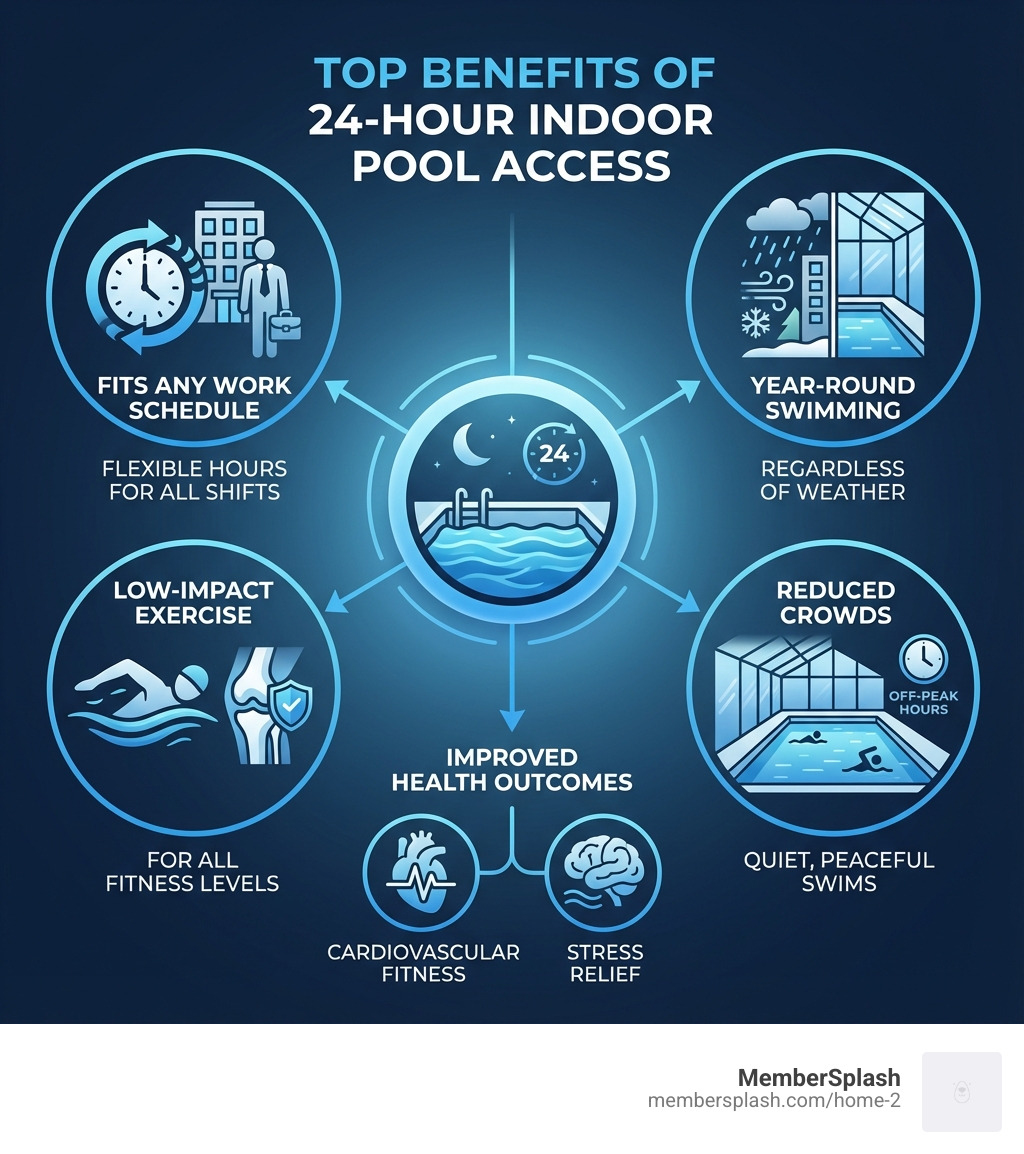
Infographic showing the top benefits of 24-hour indoor pool access: fits any work schedule with flexible hours, year-round swimming regardless of weather, low-impact exercise for all fitness levels, reduced crowds during off-peak hours, and improved health outcomes including cardiovascular fitness and stress relief - 24 hour indoor pool near me infographic

The Best Benefits of 24/7 Pool Access

Imagine slipping into a heated indoor pool at 3 AM after a long night shift. That’s the magic of 24/7 pool access—reclaiming your time and prioritizing your well-being on your own terms.

The benefits extend far beyond simple convenience:

  • Convenience: Swim on your schedule without rushing to beat closing times. The pool is ready when you are.
  • Stress Relief: A late-night or early-morning swim is therapeutic. The calming effect of water and physical exertion is a powerful stress reducer.
  • Low-Impact Exercise: Swimming is renowned for being gentle on the joints while still providing a full-body workout. It’s perfect for all ages and fitness levels, from recovery to intense training.
  • Year-Round Fitness: No matter the weather outside – be it scorching summer heat or a chilly winter day – an indoor pool provides a climate-controlled sanctuary for your aquatic workouts.
  • Muscle Recovery: Many facilities also have whirlpools or hot tubs, perfect for soothing sore muscles.
  • Improved Sleep: Regular physical activity, especially swimming, can significantly improve sleep quality. A late-night dip can help signal your body it’s time to wind down.

As the CDC highlights, physical activity saves lives and money. For pool operators, offering flexible amenities improves the value for members. Our MemberSplash platform helps facilities manage access efficiently so members can enjoy their pool time. You can find out more about how MemberSplash benefits different roles within a facility here.

Fit for Any Schedule

A 24 hour indoor pool near me adapts to diverse lifestyles, as life doesn’t always follow a 9-to-5 schedule.

  • Shift Workers: For nurses, first responders, or anyone working irregular hours, a 24-hour pool is a godsend. You can swim before or after a night shift, offering a crucial outlet for physical and mental well-being when most other facilities are closed.
  • Parents: Juggling kids’ schedules, work, and household duties often leaves little time for personal fitness. With a 24-hour option, parents can sneak in a swim during early morning hours before the kids wake up or late at night once everyone is asleep, without needing childcare.
  • Students: Late-night study sessions can be draining. A quick dip can help clear the mind, reduce stress, and re-energize for more studying or provide a much-needed break.
  • Travelers: Whether you’re dealing with jet lag or just looking to maintain your routine on the road, hotels with 24-hour pools offer a consistent fitness option, no matter what time zone you’re in.
  • Overcoming Crowded Gym Times: Let’s be honest, nobody enjoys swimming in a crowded lane. Extended hours mean you can often find times when the pool is less busy, allowing for a more peaceful and productive workout.
  • Workout Consistency: When your pool is always open, there are fewer excuses to skip a workout. This consistent access fosters better adherence to your fitness goals, making it easier to build and maintain a healthy habit.

A Boost for Overall Wellness

Access to a 24 hour indoor pool near me also boosts overall wellness, offering a holistic approach to health.

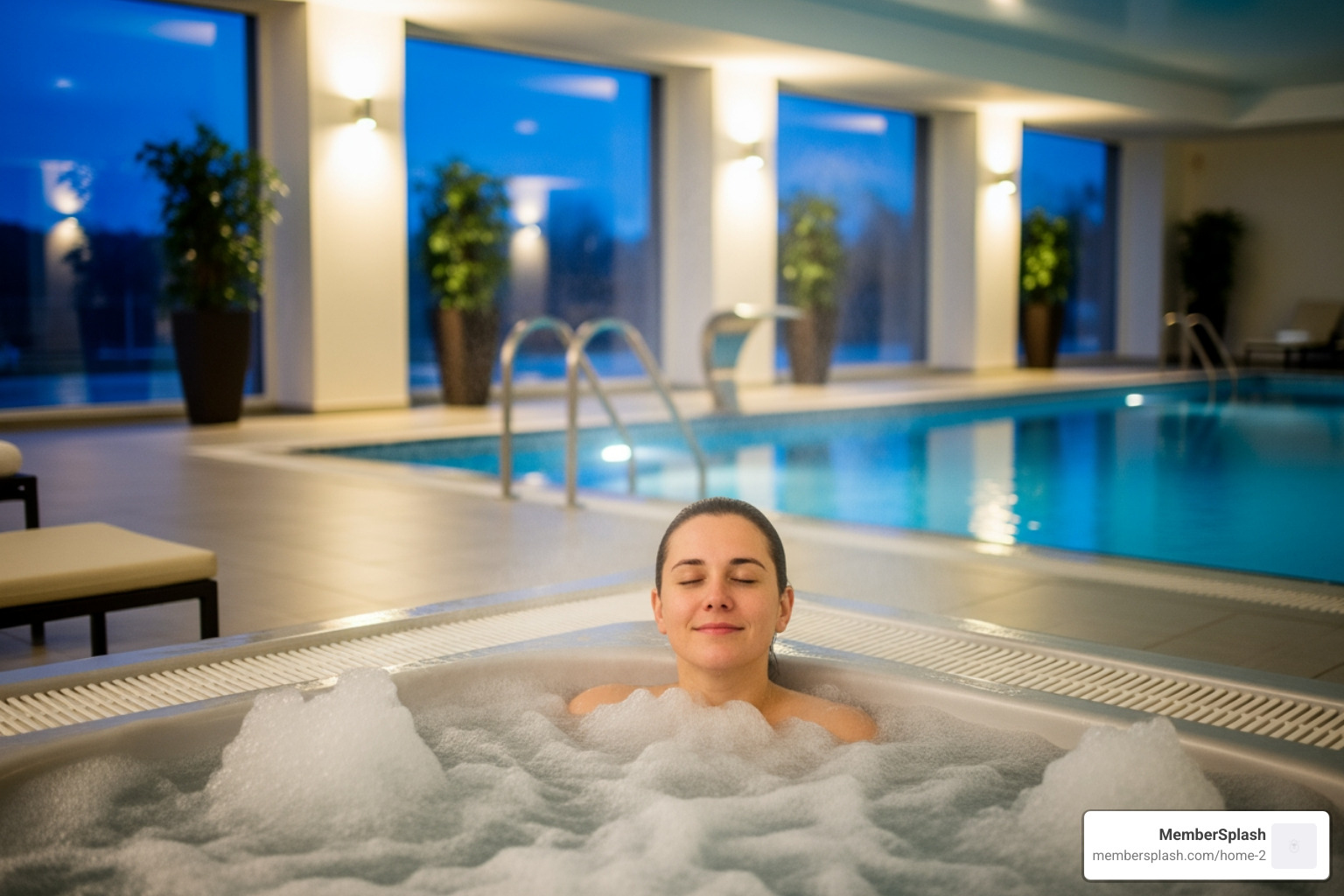
Person relaxing in a whirlpool next to a pool - 24 hour indoor pool near me

  • Mental Clarity: The rhythmic motion of swimming and the quiet environment of an uncrowded pool can be meditative. It’s a fantastic way to clear your head, reduce anxiety, and gain mental clarity, especially during those peaceful late-night or early-morning hours.
  • Hydrotherapy: Warm water pools and whirlpools offer therapeutic benefits, easing muscle tension, improving circulation, and providing relief from aches and pains. It’s a natural way to refresh your body.
  • Joint Health: The buoyancy of water reduces the impact on joints, making swimming an ideal exercise for individuals with arthritis or those recovering from injuries. It allows for a full range of motion without strain.
  • Cardiovascular Fitness: Swimming is an excellent cardiovascular workout, strengthening the heart and lungs, improving stamina, and contributing to overall heart health.

The U.S. Department of Health and Human Services notes that physical activity reduces the risk of many chronic diseases. Swimming is a fantastic way to gain these benefits. For more details, consult this comprehensive guide: What Are the Benefits of Gym Membership with Us?.

How to Find a 24 hour indoor pool near me

Finding a 24 hour indoor pool near me requires some detective work, as true 24/7 access is a premium feature. The right approach can uncover facilities with hours suited to your schedule.

Person using a smartphone to search for pools - 24 hour indoor pool near me

Start your search with a simple online query. Use terms like “24 hour indoor pool Baltimore,” “late night swim Annapolis,” or “gyms with pools near me open late.” Supplement this with:

  • Gym Locators: Most major gym chains have comprehensive online locators.
  • Hotel Booking Sites: Filter searches for hotels with “indoor pool” and then check their specific amenity details for hours.
  • Private Pool Rentals: Apps like Swimply are revolutionizing how people access private aquatic spaces.
  • Community Centers & YMCAs: While less likely to be 24/7, many offer extensive early morning and late evening hours. Check their websites directly.

Always double-check the specific hours for the pool itself, as club hours might differ from aquatic facility hours.

National Gym Chains

Many national gym chains offer impressive aquatic facilities with extended or 24-hour access. In areas like Baltimore or Annapolis, these are often your best bet for finding a 24 hour indoor pool near me.

Common gym amenities you might find alongside pools include:

  • Lap lanes for serious swimmers
  • Whirlpools or hot tubs for relaxation and recovery
  • Saunas and steam rooms
  • Locker rooms with showers
  • Family-friendly leisure pools
  • Aqua fitness class areas

24 Hour Fitness aims to provide facilities around the clock. While not every pool is open 24/7, many offer extended hours. Their website highlights pools and whirlpools as key amenities. To find a location and check specific pool hours, use their locator: Gym Locations Near Me – 24 Hour Fitness. We recommend calling ahead, as hours can vary due to classes or maintenance.

Other national chains, like Life Time Fitness, are known for their luxurious and comprehensive facilities, often including multiple indoor and outdoor pools, whirlpools, and dedicated lap lanes. While specific 24-hour access for pools might not be universal across all their locations, they typically offer very early morning and late evening hours.

When considering a gym membership, pay close attention to the membership tiers and pool access policies. Some memberships might offer broader access or include amenities like towel service, while others might have restrictions. For facilities, managing these different membership types and ensuring smooth access is crucial. That’s where solutions like our online payment processing come in handy for efficient membership management: More info about online payment processing.

Hotels and Resorts

Hotels and resorts are excellent short-term sources for a 24 hour indoor pool near me. While not all offer 24-hour access, many provide extended hours for early risers and night owls.

Hotel amenities often include:

  • Heated indoor pools
  • Comfortable lounging areas
  • Poolside service (at some higher-end establishments)
  • Whirlpools or hot tubs

Access is typically restricted to guests, making it a more private experience. It’s often seen as a significant travel perk, especially during off-season months when outdoor pools are closed.

In our local area, the Crowne Plaza Annapolis is an example of a hotel that offers an indoor pool. While the research doesn’t specify 24-hour operation for their pool, many Crowne Plaza hotels aim to provide excellent amenities for their guests, making them a good starting point for inquiries about extended hours. Always check directly with the hotel for their current pool operating hours.

When booking, we always advise contacting the hotel directly to confirm pool hours, especially if 24-hour or late-night access is a priority for you. Hotel websites are a great starting point, but a quick phone call can save you disappointment.

Private Pool Rentals

For a private and flexible experience, private pool rentals are a popular, innovative solution. This option lets you book a pool by the hour, giving you complete control over your swim time.

The Swimply app is at the forefront of this trend. Think of it as an Airbnb for pools. Owners list their private pools, hot tubs, saunas, and even entire backyard spaces for rent. This means you could potentially find a 24 hour indoor pool near me that’s a private residence, offering a serene and exclusive environment.

Here’s why private pool rentals are appealing:

  • Hourly Rentals: Pay only for the time you use, making it cost-effective for short, focused swims.
  • Private Experience: Enjoy the pool without crowds or distractions. It’s just you (and your invited guests, if allowed).
  • Variety of Amenities: Beyond just pools, you might find listings that include hot tubs, saunas, or even unique “Igloo” collections for winter enjoyment.
  • Flexibility: Many hosts offer flexible booking times, and some may accommodate very early or very late requests.

To explore private indoor pools available for rent in your area, you can download the Swimply app: Download the app. This is an excellent option if traditional gyms or hotels aren’t meeting your specific needs for privacy or exact timing.

What to Expect: Amenities, Policies, and Safety

Once you find a potential 24 hour indoor pool near me, it’s important to understand its amenities, policies, and safety measures. Facilities with extended or 24-hour access have specific protocols for a smooth, secure experience.

Typically, you’ll gain access via a key card or a digital membership pass. Membership rules will dictate who can use the facility and when. Pool maintenance schedules are also vital to be aware of, as even 24-hour pools will have designated cleaning or treatment times. Always look for clearly displayed safety equipment. For pool operators, managing these aspects—from member access to reservation systems—is streamlined with modern software. Our MemberSplash platform, for instance, helps facilities implement efficient reservation systems to manage pool usage and ensure fair access: More info about reservation systems.

Typical Amenities and Features

A quality indoor pool with extended hours often includes features to improve your experience.

  • Lap Lanes: For those focused on fitness, dedicated lap lanes are a must. These are usually clearly marked and sometimes have specific rules regarding speed or direction.
  • Whirlpools/Hot Tubs: Perfect for warming up before a swim or relaxing muscles afterward, whirlpools are a popular addition. They offer hydrotherapy benefits, promoting relaxation and recovery.
  • Saunas and Steam Rooms: Many upscale gyms and hotels include saunas and steam rooms near their pool areas, offering additional relaxation and detoxification benefits.
  • Locker Rooms: Clean, well-maintained locker rooms with showers, changing areas, and secure lockers are standard.
  • Towel Service: Some facilities offer complimentary towel service, while others require you to bring your own. Always check beforehand! (As 24 Hour Fitness noted, they don’t offer towels but sometimes sell them if you forget!)
  • Comfortable Lounging Areas: Even for a quick dip, having a place to sit, relax, or wait for others can make a big difference.

While we can’t list amenities for every Baltimore or Annapolis location, inquire about these general features. For example, Life Time’s Garden City location shows dedicated hours for various pools and whirlpools, highlighting the variety of amenities available: Club Hours at Garden City | Life Time.

Access, Rules, and Special Hours

Even 24-hour facilities have rules and schedules for safety and enjoyment. These policies are crucial for a 24 hour indoor pool near me.

  • Age Restrictions: Most facilities have age limits for unaccompanied minors, especially during unstaffed or late hours. Children 12 and older might be allowed to be members, but often need a guardian present. Always clarify these policies if you plan to bring younger swimmers.
  • Guest Policies: Bringing a guest usually involves specific rules, such as signing them in, paying a day pass fee, or having them adhere to certain hours. Our MemberSplash platform helps facilities manage these complexities with features like guest tracking and payment: More info about guest tracking and payment.
  • Family Swim Times: While a pool might be 24-hour, dedicated “family swim” or “open swim” times might be restricted to specific hours, particularly at community-oriented facilities.
  • Aqua Classes: Pools often host scheduled aqua fitness classes, during which lap lanes or certain areas of the pool may be unavailable for general use. These are usually listed on an events calendar, which our MemberSplash platform can help facilities manage: More info about events calendar.
  • Maintenance Closures: All pools require regular cleaning and maintenance. Even 24-hour facilities will have scheduled downtimes for deep cleaning, chemical balancing, or repairs. These are usually communicated in advance.

It’s always best to check the specific facility’s website or call them directly to understand their full schedule and policies. This helps avoid disappointment and ensures you can make the most of your membership.

Safety Measures at Unstaffed Hours

Swimming at 3 AM raises safety questions. Facilities with 24-hour access implement measures to protect members, especially when no lifeguard is on duty.

  • No Lifeguard on Duty: This is a critical point. Many 24-hour pools operate without a dedicated lifeguard during off-peak hours. Facilities will typically have clear signage stating “Swim at Your Own Risk.”
  • Emergency Phones: Look for emergency call boxes or phones directly connected to security or emergency services, usually located poolside.
  • CPR-Trained Staff on-site: While a lifeguard might not be watching the pool, the facility should have staff members (like front desk personnel or gym attendants) who are trained in CPR and first aid and can respond to emergencies.
  • Security Monitoring: Many 24-hour facilities use surveillance cameras in and around the pool area, monitored by security personnel, to ensure member safety and deter inappropriate behavior.
  • Pool Rules Signage: Comprehensive and clearly visible signage detailing all pool rules, emergency procedures, and safety guidelines is a must. These rules often include no diving, no running, and restrictions on alcohol or glass containers.
  • Check-in and Access Control: Robust access control systems, often involving key cards or biometric scanners, ensure that only authorized members can enter the facility. Some systems even use photo verification upon check-in, which our MemberSplash platform supports, adding an extra layer of security: More info about check-in photo verification.

When using a 24-hour pool, it’s advisable to swim with a buddy if possible, especially during unstaffed hours. Always be aware of your surroundings and understand the emergency procedures.

Frequently Asked Questions about 24-Hour Indoor Pools

We understand you might have more questions before diving into 24 hour indoor pool near me. Here are some common inquiries we encounter:

Are 24-hour indoor pools actually open 24/7?

This is a common question with a nuanced answer. “24-hour” doesn’t always mean the pool itself is open 24/7.

  • Most are not strictly 24/7: Many facilities that advertise “24-hour access” for their gym might have slightly different hours for their pool area. For example, a gym might be open 24 hours, but the pool could close from midnight to 4 AM for cleaning or maintenance.
  • Exceptions for Cleaning: Pools require regular chemical balancing, vacuuming, and deep cleaning. These activities often necessitate temporary closures, typically during late-night or early-morning hours when usage is lowest.
  • Maintenance Periods: Beyond routine cleaning, pools periodically require more extensive maintenance or repairs, which will lead to planned closures.
  • Special Events: The pool might be reserved for aqua classes, swim lessons, or special events during certain times, limiting general access.

Our best advice is to check the specific schedule for the pool. Don’t assume its hours are identical to the gym’s. For instance, Life Time’s Castle Creek location has different hours for the club and its amenities: Club Hours at Castle Creek | Life Time. A quick call or schedule check will clarify any ambiguities.

What should I look for when choosing a gym with a 24 hour indoor pool near me?

When choosing a membership, here’s what we recommend considering:

  • Cleanliness: This is paramount. Inspect the pool area, locker rooms, and showers during your visit. A clean facility indicates good management and a healthy environment.
  • Water Temperature: Some prefer cooler water for intense lap swimming, while others enjoy a warmer, more therapeutic soak. Ask about the pool’s typical temperature to ensure it aligns with your preference.
  • Amenities: Does it offer lap lanes, a leisure area, a whirlpool, sauna, or steam room? Consider what additional features are important for your wellness routine.
  • Cost vs. Value: Evaluate the membership fees against the amenities offered, the hours of operation, and the overall quality of the facility. Don’t forget to ask about any initiation fees or long-term contract requirements.
  • Member Reviews: Check online reviews or ask current members for their opinions on the pool, staff, and overall experience.
  • Access Policies: Confirm the exact pool hours, especially during the times you plan to swim. Inquire about age restrictions, guest policies, and any potential closures for classes or maintenance. Also, ask about the security measures in place during unstaffed hours.

For residents in Baltimore and Annapolis, consider visiting local options like Merritt Clubs in Downtown Baltimore or the Arundel Olympic Swim Center. While they may not all offer 24-hour pool access, they are reputable facilities where you can inquire about their specific indoor pool hours and amenities.

Can I bring my kids or a guest to a 24 hour indoor pool near me?

Policies for bringing children or guests vary significantly by facility. It’s crucial to understand them beforehand to avoid surprises.

  • Varies by Location: Each gym, hotel, or private rental host will have its own set of rules. A family-oriented gym might be more accommodating than a boutique hotel or a private rental.
  • Guest Policies: Most facilities allow guests, but often with specific requirements. This might include:
    • Sign-in Procedures: Guests usually need to be signed in by a member or hotel guest.
    • Day Pass Fees: A fee is commonly charged for guests, which can vary widely.
    • Limited Visits: Some memberships might include a certain number of free guest passes per month or year, or limit how often the same guest can visit.
  • Age Restrictions: For children, age limits are very common, especially during late-night or unstaffed hours. Many facilities require minors to be accompanied by an adult, and some may have a minimum age for using the pool at all. For example, 24 Hour Fitness generally welcomes children 12 and older as members to use their pools, but recommends minors are accompanied by a guardian.
  • Supervised Hours: Even if a pool is open late, specific “family swim” or “children’s hours” might be designated, meaning children are only allowed during these times.
  • Private Rentals: With services like Swimply, guest policies are set by the individual host. Some allow many guests for an additional fee, while others prefer a more intimate experience.

It’s always best to check the facility’s specific guest and age policies before your visit. For facilities themselves, managing these diverse guest policies and member accounts is a complex task. Our MemberSplash platform helps streamline this by providing a robust member account database and guest tracking features, ensuring smooth operations and clear communication for all: More info about member account database.

Conclusion

Finding a 24 hour indoor pool near me is a game-changer for your fitness routine. The flexibility to swim anytime lets you fit exercise into a demanding schedule, reaping health benefits year-round. From late-night stress relief to an early morning workout, these facilities offer unparalleled convenience.

While true 24/7 pool access is rare, many gyms, hotels, and private rentals offer extended hours. Whether you explore 24 Hour Fitness, Crowne Plaza Annapolis, or a Swimply rental, a solution likely exists. Always verify the specific pool hours, amenities, and safety protocols for any location you consider.

For pool operators, offering these premium amenities means attracting a wider range of members and enhancing satisfaction. Streamlining access, managing memberships, and communicating policies efficiently are key to providing an exceptional experience. That’s precisely where MemberSplash excels. Our software helps facilities handle complex pricing, manage guest tracking, and ensure smooth operations, saving time and costs while maximizing revenue.

Ready to transform your pool management and offer your members the flexibility they deserve?
Discover our pool management solutions

Membership Renewal Strategies to Start Before Spring: How to Use Member Splash to Get Ahead, Boost Renewals & Reduce Administrative Work