
Sync and Succeed: Integrating Your Email Marketing Efforts
Why Email Marketing Integration Matters for Your Club or Association
Email marketing integration is the process of connecting your email platform with other business software—like your member database, payment system, or event registration tools—so data flows automatically between them.
Quick Answer: What Email Marketing Integration Does
- Eliminates manual data entry by automatically syncing member information across systems
- Triggers timely emails based on member actions (new sign-up, event registration, payment received)
- Personalizes messages using data from your CRM and other tools
- Tracks performance by connecting email results to revenue and member engagement
- Saves time by automating repetitive communication tasks
Running a membership organization means juggling multiple systems. Your member database lives in one place. Your email tool sits in another. Payment records are somewhere else. This creates what experts call “data silos”—isolated pockets of information that don’t talk to each other.
The result? You’re copying and pasting member lists. Manually triggering welcome emails. Wondering which campaign actually drove renewals. It’s time-consuming, error-prone, and frustrating.
The good news: email marketing delivers an impressive ROI of $36 for every dollar spent. But you only capture that value when your systems work together. When your email platform syncs with your member database, point-of-sale system, and analytics tools, you create what the research calls “personalized, efficient communication with customers” and a “seamless experience.”
For clubs, HOAs, and pool management companies, this means new members get welcome emails automatically. Payment reminders go out without manual tracking. Event promotions target the right people based on past attendance. And you see exactly which emails drive revenue.
What are email marketing integrations?
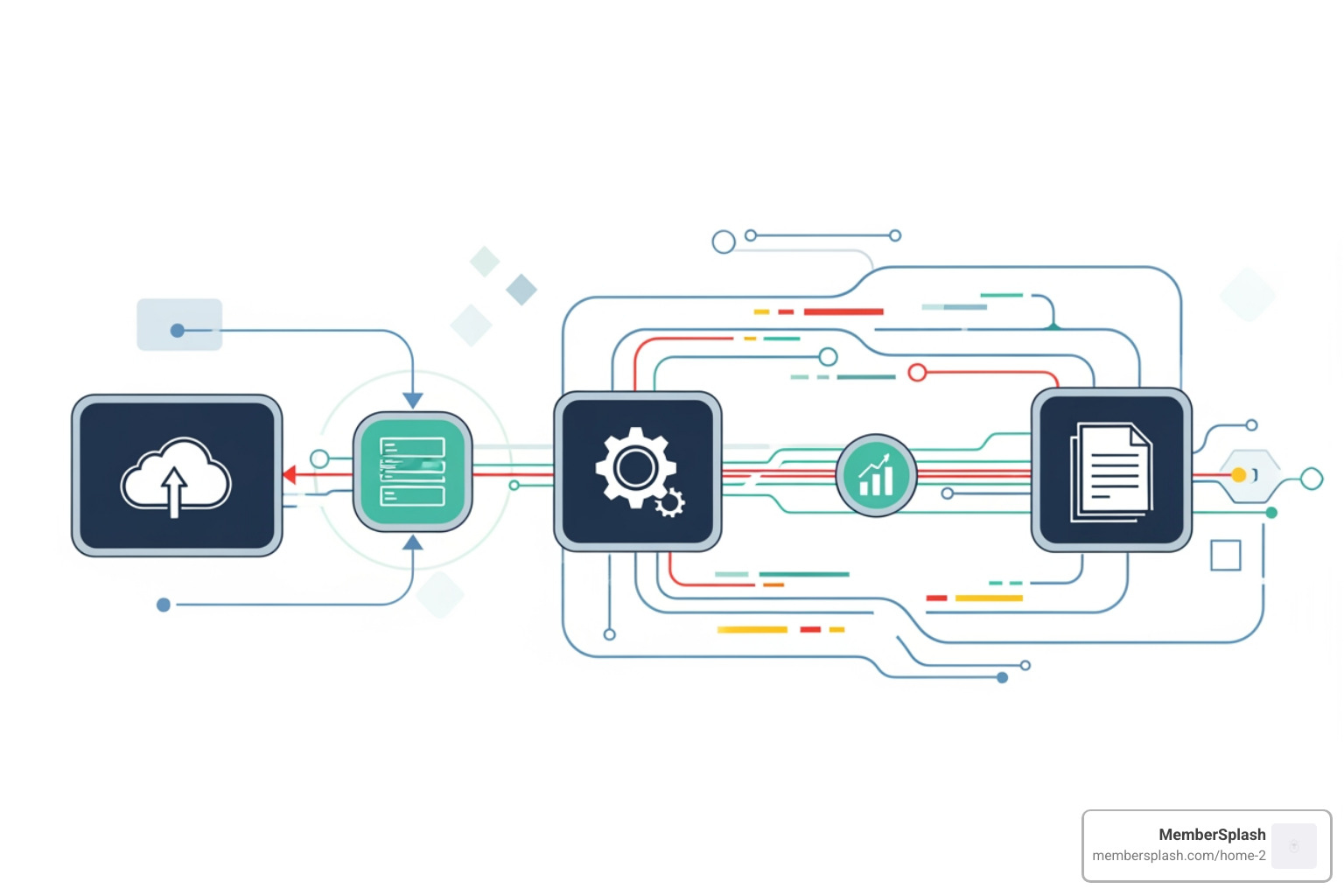
At its heart, email marketing integration is all about getting your various digital tools to play nicely together. Think of it like a well-orchestrated team where every player knows their role and communicates seamlessly. Instead of siloed systems, where your member database holds one set of information and your email platform another, integration ties these systems, tools, and software together for seamless processes around email marketing.
This means unifying your data. When your marketing department can seamlessly tie systems and processes together, it allows us to unify our email marketing with our CRM, point-of-sale, and analytic tools. This eliminates the need for tedious manual data entry and ensures that the information used for your email campaigns is always up-to-date and accurate. Essentially, we’re breaking down those pesky data silos to create a single, comprehensive view of every member.
Why is email marketing integration crucial for modern businesses?
In today’s digital world, efficiency and personalization are not just buzzwords—they’re necessities. Email marketing integration is crucial for modern businesses, especially membership organizations like ours, because it directly impacts our ability to connect with members, streamline operations, and ultimately, grow.
Firstly, it’s about streamlining workflows and improving efficiency. Imagine the time saved when a new member’s details are automatically added to your email list the moment they sign up, rather than having to manually export and import lists. This automation means less manual effort, allowing our team to focus on strategy and creative content rather than repetitive administrative tasks.
Secondly, it enables hyper-personalization. With integrated data, we can send highly relevant messages to every member at the right moment. This leads to higher engagement and improved conversions, turning casual interest into lasting loyalty.
Thirdly, it improves analytics. By connecting email performance data with other business metrics, we gain a clearer picture of what’s working and why. This informed approach helps us optimize our campaigns, ensuring we’re always improving.
Finally, these benefits collectively lead to increased sales and engagement. Whether it’s driving registrations for an upcoming event, promoting club merchandise, or encouraging membership renewals, integrated email marketing helps us achieve our business goals more effectively, delivering on that impressive ROI.
How Integrations Streamline Workflows and Boost Efficiency
One of the most immediate and impactful benefits of email marketing integration is its ability to streamline workflows and dramatically boost efficiency. We’ve all experienced the frustration of manual tasks: copying data, sending individual reminders, or trying to piece together information from different platforms. Integrations put an end to this, freeing up valuable time and resources for our team.
By connecting your email platform with other software, we can reduce manual data entry and automate many routine communications. This means less time spent on administrative chores and more time focused on delivering exceptional experiences for our members. For example, Zapier highlights that email marketing automation allows us to automatically segment contacts, personalize messages, and schedule campaigns without manual effort, resulting in higher engagement, improved conversions, and significant time savings.
This seamless data flow also ensures consistent messaging across all member touchpoints. Whether it’s a welcome email or an event reminder, the information is always accurate and aligned with our club’s overall communication strategy. You can find more information about how we streamline member communications with our bulk email communication services.
Automating the Member Journey
For membership organizations, the member journey is a series of interactions, from initial interest to long-term engagement. Email marketing integration allows us to automate key touchpoints in this journey, making it smoother for members and simpler for our staff.
- New Member Onboarding: The moment a new member signs up through our platform, integration can trigger a personalized welcome email series. This isn’t just a generic “hello”; it can be custom with specific information relevant to their membership type, club rules, and upcoming events. Klaviyo’s approach to welcome flows, for instance, involves saving email templates and triggering them based on “Added to List” actions, allowing us to deliver timely and relevant content.
- Event Registration Confirmations: When a member registers for a club event, an automated confirmation email can be sent instantly, providing all necessary details. This can be followed by pre-event reminders, ensuring good attendance and reducing last-minute queries.
- Dues Payment Reminders: Say goodbye to manually tracking overdue payments! Integrations can automatically send gentle reminders to members whose payments are approaching their due date or are overdue, improving collection rates and reducing administrative burden.
- Automated Segmentation: Based on member actions or profile data, integrations can automatically segment our audience. For example, members who attend swim lessons might receive emails about advanced training, while those who frequent the tennis courts get updates on tournaments. This ensures every email is relevant.
Common Integration Workflows for Membership Clubs
Let’s look at some practical examples of how email marketing integration translates into real-world benefits for clubs, HOAs, and pool management companies:
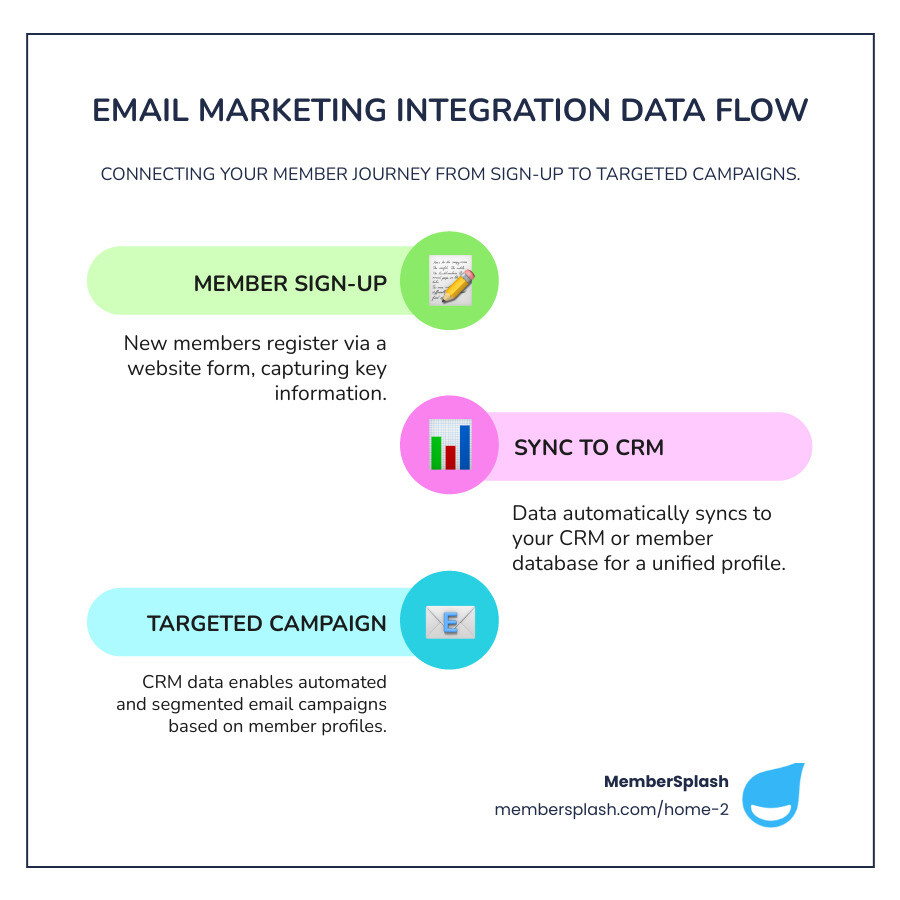
- New member signs up on website -> Add to CRM & “New Members” email list: When a prospective member fills out a contact form or completes registration on our website, their details are immediately captured and added to our CRM. Simultaneously, they are automatically subscribed to a “New Members” email list, triggering a welcome series that introduces them to the club’s amenities, rules, and community spirit. This is akin to a new lead from a social advert being added to a marketing app and triggering a sales campaign, but custom for our membership onboarding.
- Member registers for an event -> Send confirmation & pre-event reminder emails: A member signs up for our annual pool party or a community BBQ. Our event management system, integrated with our email platform, instantly sends a confirmation email with event details. As the event draws near, automated reminders are dispatched, potentially with directions or last-minute tips, ensuring maximum attendance and engagement. This leverages the power of event-driven transactional emails and SMS, as highlighted by Mailchimp’s developer tools.
- Member’s payment is overdue -> Trigger automated reminder sequence: Our payment processing system detects an overdue membership fee. This triggers an automated sequence of polite, yet firm, email reminders. These can be spaced out over several days or weeks, improving collection rates without requiring manual intervention from our staff.
- Member’s birthday -> Send personalized greeting and offer: Imagine wishing every member a happy birthday with a personalized email, perhaps even including a special offer for a discounted guest pass or a free snack bar item. By integrating our member database, which contains birth dates, with our email system, we can easily set up automated birthday campaigns. This is a classic example of using CRM data to trigger personalized campaigns with a discount code, fostering member loyalty and a sense of belonging.
Opening up a 360-Degree Member View with CRM Integration
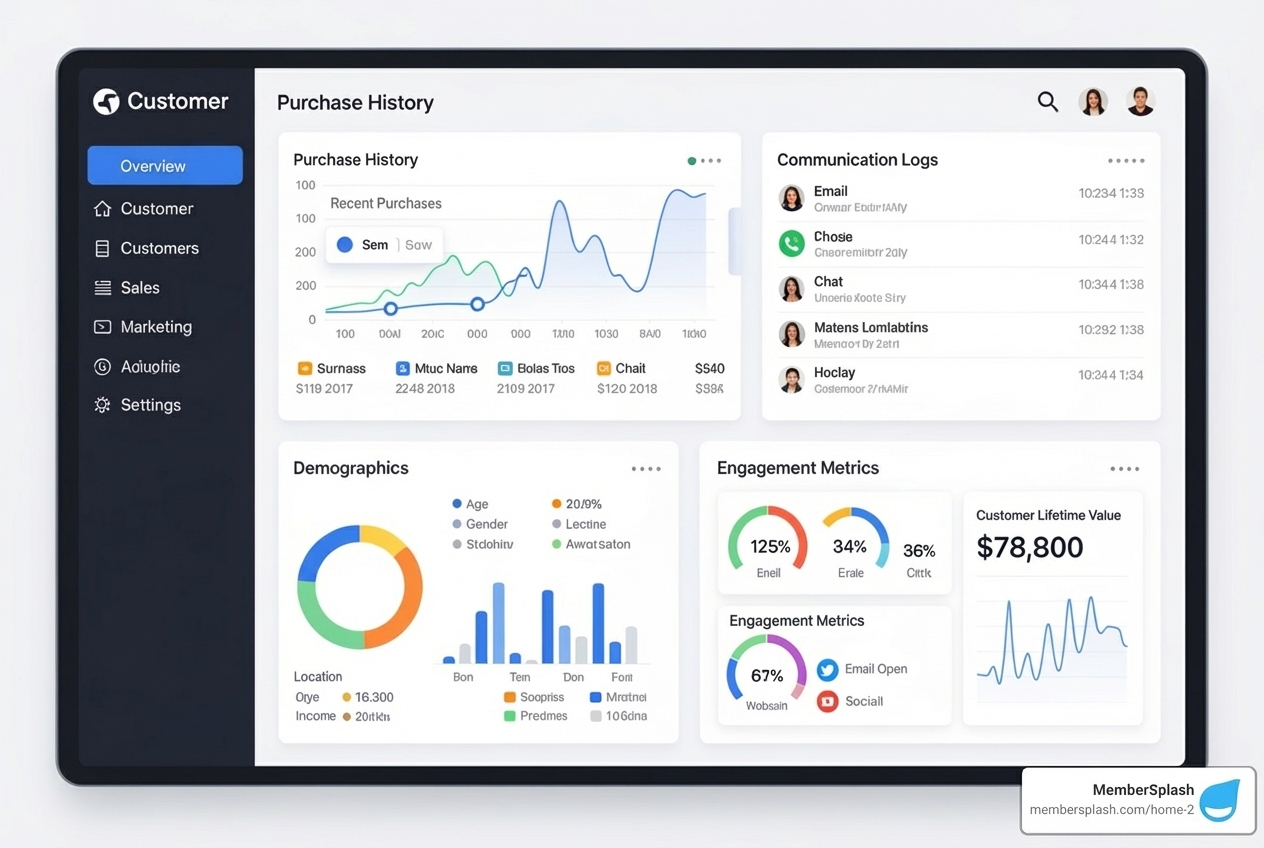
For any membership organization, truly understanding your members is the cornerstone of success. Email marketing integration with your CRM (Customer Relationship Management) system is the key to open uping a powerful 360-degree view of every individual. This holistic perspective means we’re not just seeing an email address; we’re seeing a complete member profile, including their membership type, payment history, event attendance, interests, and communication preferences.
Klaviyo emphasizes the power of a “CDP (Customer Data Platform) that gives you the full data story” and a “360-degree view of each customer.” This unified data empowers us to create highly personalized experiences, drive data-driven segmentation, and ultimately, increase member satisfaction and retention. When all member data resides in one accessible location, our ability to connect, engage, and serve our community is dramatically improved.
Benefits of Integrating Email Marketing with Your Member Database
Integrating our email marketing efforts with our member database (often our CRM) offers a multitude of benefits that directly impact our operational efficiency and member engagement:
- Single Source of Truth: This is perhaps the most significant benefit. All member information—contact details, membership status, payment records, past event attendance, preferences, and communication history—resides in one central location. This eliminates data inconsistencies, reduces errors, and ensures that everyone on our team is working with the most current information. For more details on managing member data, explore our member account database services.
- Hyper-Personalization: With a comprehensive member profile, we can move beyond basic personalization (like using a member’s first name). We can segment our audience based on specific behaviors, interests, or demographics. Imagine sending an email about upcoming swim team tryouts only to members with children in a certain age group, or promoting adult fitness classes to members who’ve attended similar events in the past. This ensures “every subscriber receives relevant content at the right moment,” leading to significantly higher open and click-through rates.
- Targeted Campaigns: Instead of broadcasting generic messages, integration allows us to create highly targeted campaigns. We can segment our audience based on their membership tier, how long they’ve been a member, which facilities they use most, or even their past interactions. This means we can “segment our audience to stay relevant,” as Zapier suggests, sending messages that truly resonate.
- Improved Member Engagement: When members receive emails that are relevant and timely, they feel understood and valued. This leads to increased interaction with our communications, higher attendance at events, and a stronger sense of community. This translates to “higher engagement, improved conversions,” which is the goal of any effective email strategy.
Leveraging Data for Increased Revenue
A 360-degree view of our members isn’t just about better communication; it’s a powerful tool for driving revenue and fostering loyalty. By leveraging the rich data housed in our integrated systems, we can identify opportunities for growth and tailor our offerings to maximize impact.
- Targeted Promotions for Club Merchandise Sales: Let’s say our member database shows that a group of members frequently purchases items from our pro shop. We can send them an exclusive email promoting new merchandise arrivals or offering a special discount. This targeted approach is far more effective than a blanket promotion.
- Upselling Membership Tiers: If a basic member frequently brings guests or expresses interest in additional amenities, our integrated system can identify this. We can then send them a personalized email highlighting the benefits and cost savings of upgrading to a higher membership tier.
- Promoting Paid Events Based on Past Attendance: Members who have attended our annual gala or special workshops in the past are prime candidates for future paid events. Our integrated data allows us to identify these individuals and send them early-bird invitations or exclusive access, significantly increasing event participation and revenue.
- Using Guest Tracking Data for Targeted “Bring a Friend” Campaigns: Our guest tracking data can reveal which members frequently bring guests. We can leverage this insight to send these “super-connectors” a special “bring a friend” campaign, offering incentives for new member referrals. This not only drives new memberships but also rewards our most engaged community members.
Choosing Your Tools: A Practical Guide to Email Marketing Integration
Starting your email marketing integration journey requires choosing the right tools to make those connections. The landscape of options is vast, from simple connectors to complex APIs. Understanding the different mechanisms and what to look for will ensure you choose the right path for your club or association.
At a high level, integrations are facilitated by:
- APIs (Application Programming Interfaces): These are essentially sets of rules that allow different software applications to communicate with each other. They are the backbone of most custom and sophisticated integrations.
- Connectors: These are pre-built links designed to connect two specific applications. They often require less technical expertise to set up.
- Native Integrations: Many email marketing platforms offer built-in connections to popular CRMs, e-commerce platforms, or other tools. These are typically the easiest to configure.
- Third-Party Integration Tools (e.g., Zapier): Platforms like Zapier act as a bridge between thousands of different applications, allowing you to create automated workflows (called “Zaps”) without writing any code. Zapier, for instance, can connect your email platform to “dozens of data sources” and over 3000+ apps, as SendX highlights.
Security considerations are paramount. When data is flowing between systems, we must ensure that it is protected and that we comply with all relevant data privacy regulations, such as anti-spam and privacy laws.
Key Considerations for Selecting Integration Platforms
When we’re looking to improve our email marketing with integrations, choosing the right platforms and tools is critical. Here are the key factors we consider to ensure a successful and sustainable integration strategy:
- Scalability: Will the integration solution grow with our club? As our membership expands and our needs evolve, the chosen platform should be able to handle increasing data volumes and more complex workflows without breaking the bank or requiring a complete overhaul.
- Ease of Use: Not everyone on our team is a developer, and that’s okay! We look for platforms that offer intuitive interfaces, often with drag-and-drop or point-and-click options. Many modern platforms offer “easy to use tools” that are “equally usable for a complete novice and an expert.”
- Available Connectors: Does the platform already integrate with the tools we currently use, like our MemberSplash membership management system, payment processors, or event schedulers? Look for an “open API and hundreds of integrations” or even “350+ apps to connect” as some platforms boast. This reduces the need for custom development.
- Cost and ROI: What’s the upfront cost, and what are the ongoing fees? More importantly, what’s the return on investment? We consider the time saved, the revenue generated from more targeted campaigns, and the improved member satisfaction. Email marketing has a strong ROI, but the integration needs to contribute positively to that.
- Data Security: Protecting our members’ data is non-negotiable. We ensure any integration platform adheres to the highest security standards, encrypts data in transit and at rest, and helps us comply with relevant privacy regulations.
- Customer Support: Should we run into an issue or need assistance, responsive and knowledgeable customer support is invaluable. We look for vendors that offer robust support channels.
- For comprehensive support throughout your integration process, consider our supported implementation services.
The Technology Behind the Connection: APIs and Connectors
Understanding the technology behind email marketing integration, like APIs and connectors, helps explain how our systems communicate.
- APIs (Application Programming Interfaces) Explained Simply: Think of an API as a digital waiter. You tell the API (the waiter) what data you want from another system (the kitchen), and it retrieves and delivers it. APIs define the rules for how software applications request and exchange information. Powerful Email APIs, like those highlighted by SendX, enable systems to talk directly. Mailchimp’s developer tools also emphasize how their APIs provide everything needed to integrate data with intelligent marketing tools.
- How Connectors Work: While APIs are the underlying language, connectors are like pre-translated phrases or specific menu items. They are pre-built integrations designed to link two specific applications, often without requiring any coding. As the Glossary Entry states, email integrations are the “tying together of systems, tools, and software.” Connectors make this tying easier for common pairings.
- Importance of an Open Developer Portal: For more complex or custom integration needs, a developer portal is invaluable. This is where developers can find documentation, tools, and resources to build bespoke connections using APIs. An open developer portal signifies a platform’s commitment to flexibility and extensive integration possibilities.
- Native vs. Third-Party Integrations: Native integrations are built directly into a software by its vendor (e.g., your email platform has a built-in connection to a popular CRM). Third-party integrations use external tools (like Zapier) to connect applications that don’t have a direct native link. Both have their place, depending on the specific needs and technical resources available.
Navigating Potential Challenges of email marketing integration
Email marketing integration offers immense benefits, but it’s not without potential challenges. Being aware of these can help you plan effectively and avoid future headaches.
- Data Mapping Issues: This is a common hurdle. Different systems might call the same piece of information by different names (e.g., “Customer ID” in one system, “Member Code” in another). Ensuring that the data fields “map” correctly between systems is crucial to avoid errors and ensure accurate data transfer.
- Maintenance Overhead: Integrations aren’t always a “set it and forget it” solution. Software updates, API changes, or even changes in our internal processes can sometimes break integrations. We need to be prepared for ongoing monitoring and occasional maintenance. Mailchimp’s best practices for developers recommend “logging and monitoring errors” to adjust code if issues persist.
- Hidden Costs: Beyond the initial setup or subscription fees for integration tools, there might be hidden costs. These could include developer time for custom configurations, unexpected fees for high data volumes, or the cost of training staff on new integrated workflows.
- Ensuring Data Privacy: As we consolidate and transfer member data across systems, maintaining privacy and security is paramount. We must ensure all integrated systems are compliant with regulations like GDPR or CCPA, and that we have proper consent for data usage.
- Complying with Anti-Spam and Privacy Laws: This is a critical legal consideration, especially when automatically adding contacts to email lists. We must always ensure that our subscribers have explicitly consented to receive marketing communications from us. Failing to do so can lead to legal penalties and damage our club’s reputation.
Frequently Asked Questions about Email Marketing Integration
What’s the difference between email marketing automation and integration?
It’s a common point of confusion, but the distinction is quite simple. Think of it this way:
- Email marketing automation is the action—it’s the process of setting up predefined rules and workflows to send messages automatically based on specific triggers (e.g., sending a welcome email when someone signs up, or a birthday greeting). It’s the “what happens.”
- Email marketing integration is the connection that enables that action by allowing data to flow between different systems (e.g., connecting your member database to your email platform so the email platform knows when someone signs up). It’s the “how it happens.”
As Zapier explains, email marketing automation is a subset of marketing automation, focused specifically on automating email campaigns, while integration is the essential link that enables these automated processes by sharing data between systems.
Can I connect my existing member database to an email platform?
Absolutely, and this is one of the primary and most beneficial use cases for email marketing integration! Connecting your existing member database to your email platform is fundamental for personalizing communications, automating workflows, and gaining a 360-degree view of your members. This can typically be achieved in a few ways:
- Pre-built Connector (Native Integration): Many popular email marketing platforms offer direct integrations with common CRM or membership management systems.
- Third-Party Integration Tool: Tools like Zapier specialize in connecting thousands of applications, often without requiring any coding. You can set up “Zaps” to transfer member data between your database and email platform.
- Custom API Integration: For unique or highly specific needs, a custom integration can be built using APIs (Application Programming Interfaces) to establish a direct, custom connection between your systems.
How much technical skill is needed to set up an integration?
The amount of technical skill required for email marketing integration varies greatly depending on the complexity of the integration and the tools you choose:
- No-Code/Low-Code Solutions: Many modern email marketing platforms and third-party integration tools (like Zapier) offer user-friendly interfaces that allow you to set up basic integrations with point-and-click or drag-and-drop functionality. For these, minimal technical skill is needed—mostly just a good understanding of your business processes and data. SendX, for example, highlights how easy their APIs and detailed documentation make integration.
- Intermediate Skill: If you’re dealing with slightly more complex data mapping or custom workflows using a third-party tool, a general understanding of how data flows and logical thinking will be beneficial, but advanced coding is usually not required.
- Advanced/Developer Skill: For highly customized integrations, working directly with APIs, or when connecting very specialized or proprietary systems, you will likely need the assistance of a developer or someone with strong technical expertise. Platforms often provide developer portals and documentation for this purpose.
Conclusion: Unify Your Systems, Amplify Your Success
In the dynamic world of membership organizations, from swim clubs to HOAs and pool management companies, effective communication is paramount. As we’ve explored, email marketing integration isn’t just a technical improvement; it’s a strategic imperative that transforms how we connect with our members and manage our operations.
By embracing integration, we open up a multitude of benefits:
- Unprecedented Efficiency: Automating mundane tasks frees up our team’s time, reduces errors, and allows us to focus on what truly matters—our members.
- Hyper-Personalized Engagement: Leveraging a 360-degree view of our members allows us to send highly relevant, timely messages that resonate, fostering stronger connections and loyalty.
- Data-Driven Decisions: Integrated analytics provide clear insights into campaign performance, enabling us to optimize our strategies and maximize our ROI.
Email marketing integration changes email from a mere communication channel into a powerful, connected business tool. It’s about ensuring every dollar spent on email marketing works harder, delivering that impressive $36 for every dollar invested.
Our MemberSplash platform is designed to be the central nervous system for your club or association, making it easier than ever to integrate your email marketing efforts. We help you unify your data, streamline your workflows, and create a seamless experience for every member.
Take the Next Step
Imagine a world where new members are welcomed automatically, event promotions are perfectly targeted, and payment reminders go out without a second thought. This isn’t a dream; it’s the reality that email marketing integration offers. Unifying your club’s operations saves time, captures revenue, and improves the member experience. A connected system is key to growth and sustained success.
Ready to transform your club’s communication and management?