
Navigating the Club Waitlist: What to Expect When You’re Expecting a Membership
The Unprecedented Rise of Country Club Waitlists
Country club waitlist times have exploded in the post-pandemic era, with nearly half of all private clubs now maintaining waitlists compared to just a quarter before COVID-19. For club managers and board members, this surge represents both an opportunity and a significant operational challenge.
Key Facts About Country Club Waitlists:
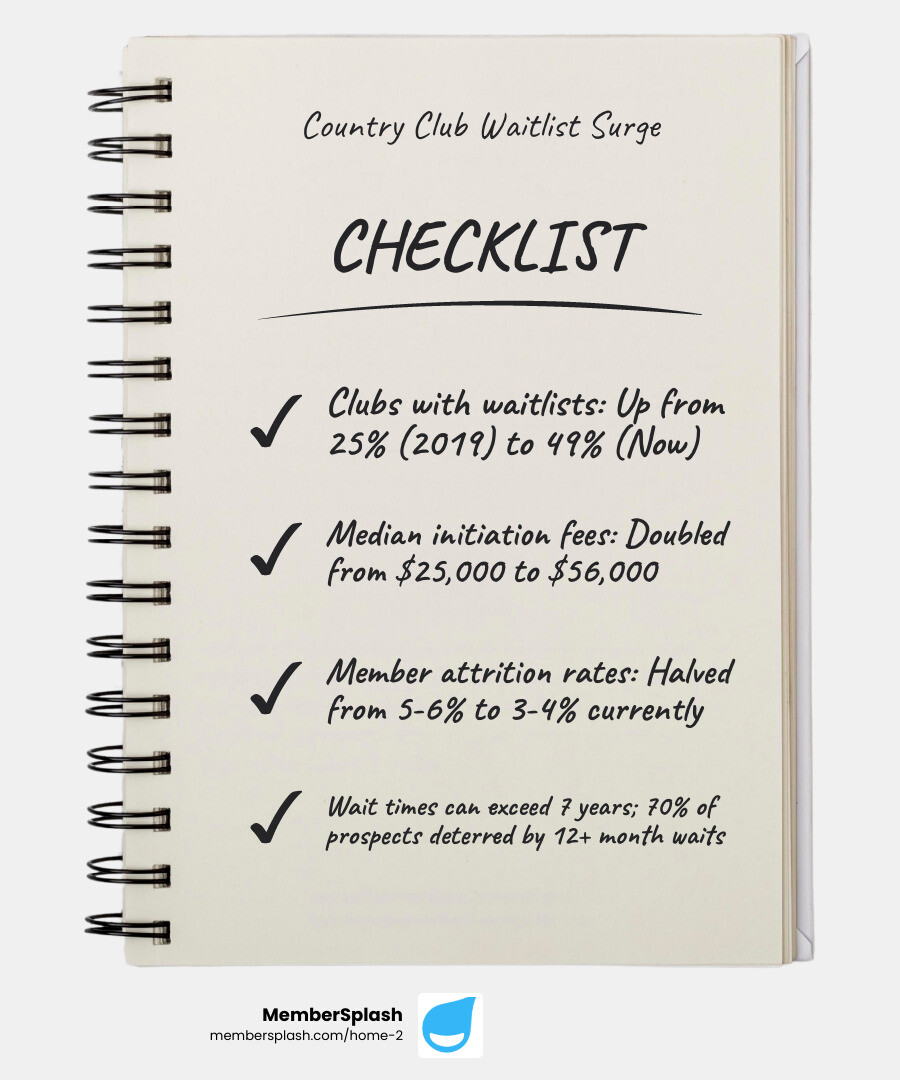
- 49% of golf country clubs now have waitlists, up from 25% in 2019
- Median initiation fees doubled from $25,000 to $56,000 since the pandemic
- Wait times range from a few months to over 7 years depending on club exclusivity
- 70% of prospects say they won’t join a club with a 12+ month waitlist
- Attrition rates dropped from 5-6% pre-pandemic to 3-4% currently, slowing membership turnover
The waitlist phenomenon isn’t just about increased demand. It reflects a fundamental shift in how Americans view private club membership. Remote work flexibility freed people to spend more time at clubs. Families sought safe, outdoor recreation during lockdowns. And perhaps most significantly, members simply stopped leaving—creating a bottleneck that transformed club operations overnight.
For clubs that have never managed a waitlist before, the challenge is substantial. How do you balance member satisfaction with revenue opportunities? What amenities should waitlisted applicants access? How do you prevent your waitlist from becoming a liability rather than an asset?
The answers require careful strategy, clear communication, and often, better technology to manage the complexity. This guide will walk you through everything you need to know about country club waitlists—from the forces driving demand to the practical systems that keep operations running smoothly.
The “Why” Behind the Wait: Factors Fueling the Surge
The current boom in country club waitlists isn’t a fluke; it’s the culmination of several powerful trends that have reshaped the private club landscape. What was once a niche pursuit for some has become a highly sought-after lifestyle for many, leading to unprecedented demand and longer waiting periods.
The Pandemic Effect on Membership
The COVID-19 pandemic acted as a powerful catalyst, fundamentally altering how we live, work, and seek recreation. With remote work becoming the norm for many, individuals and families gained newfound flexibility. This led to a search for safe, accessible, and enjoyable local amenities. Country clubs, with their expansive grounds, outdoor activities, and controlled environments, became attractive havens.
Crucially, the pandemic also led to a significant drop in member attrition rates. Before 2020, clubs typically saw 5-6% of their members resign each year. Today, that figure has fallen to 3-4%. This means members are staying put longer, creating fewer openings for new applicants. A club that once replaced its entire membership every 20 years now takes 33 years at the lower attrition rate. This slower replacement cycle directly translates into longer waitlists, as fewer spots open up each year. The increased interest in golf, in particular, played a huge role, driving up demand for private golf club memberships and tee times.
Economic and Supply Dynamics
Beyond the pandemic’s immediate impact, broader economic and supply dynamics have contributed to the waitlist surge.
First, the overall supply of country clubs in the U.S. has been contracting. In 2008, there were approximately 12,059 country clubs. By 2023, this number had fallen to 10,016, with a further slight decrease projected for 2024. While golf course closures are slowing and some new courses are in planning, the net effect is fewer private clubs to accommodate growing demand. This reduced supply, coupled with surging interest, naturally creates a bottleneck.
Second, clubs are engaged in an “amenities arms race.” To attract and retain members, many are investing millions in facility upgrades, renovations, and new programming. This investment, while enhancing the member experience, also drives up operational costs and justifies higher initiation fees. The median initiation fee for golf clubs, for instance, jumped from $29,000 in 2019 to around $50,000 by late 2022. Non-golf clubs saw their median initiation fees rise from $13,000 to $22,000 in the same period.
This combination of pandemic-fueled demand, lower attrition, reduced club supply, and increased investment has created a “good problem” for many clubs—but a challenging one for those aspiring to join. As one industry expert noted, it’s taking longer to get into clubs these days. You can learn more about this trend and its implications for golf clubs: Why it’s taking so long to get into golf clubs these days.
The Anatomy of a Country Club Waitlist

For prospective members, understanding the intricacies of a country club waitlist is crucial. It’s not just about getting your name on a list; it’s about navigating varying wait times, financial commitments, and managing expectations regarding access to amenities.
Typical Wait Times and Regional Differences
The length of a country club waitlist can vary dramatically, from a few months to several years, depending on the club’s exclusivity, location, and the type of membership desired. While some clubs in our region, like those in Annapolis and Baltimore, might have more manageable wait times, highly exclusive clubs across the country have seen waitlists extend upwards of seven years.
For example, a survey of prospective members revealed that 62% would be “not likely” or “not at all likely” to join a club with a golf membership waitlist longer than nine months. However, 38% were willing to wait one to four months, and 42% were willing to wait five months to one year. This suggests a sweet spot for clubs in managing expectations.
Wait times also differ significantly between social and golf memberships. Social memberships typically grant access to dining, social events, fitness centers, and sometimes pools and tennis courts, but exclude golf privileges. Golf memberships, of course, include everything. Because golf courses have limited capacity, golf memberships almost universally have longer and more competitive waitlists.
Understanding the Financials of a Country Club Waitlist
Joining a waitlist often comes with its own set of financial considerations, even before full membership is granted.
- Initiation Fees: These are the one-time, upfront costs to join a club. As we’ve seen, median initiation fees for golf clubs have doubled since 2019, reaching around $50,000. For clubs without golf, they’ve risen to about $22,000. These fees are often used by clubs to fund capital improvements and facility upgrades.
- Non-refundable Deposits: Many clubs now require a non-refundable deposit to secure a spot on the waitlist. This is a strategy to ensure applicants are serious and committed. While 82% of prospects surveyed said they wouldn’t invest 50% of the initiation fee to hold a spot, a smaller, nominal application fee can still generate significant revenue for clubs and filter out uncommitted individuals. In our region, some clubs have reported averaging over $6,000 annually from waitlist application fees alone.
- Monthly Dues While Waiting: Some clubs might offer a “waitlist membership” tier that allows limited access to amenities for a reduced monthly due while you await full membership.
- Food and Beverage Minimums: Once a full member, most clubs require members to spend a minimum amount on food and beverages each month or quarter.
- Capital Assessments: Clubs may occasionally levy special assessments on members to fund major renovations or improvements.
Modern club management platforms can greatly simplify the process of handling these financial transactions, from application fees to monthly dues. Learn more about how these systems can help with seamless payment processing: More info about online payment processing.
Privileges and Expectations While You Wait
For those patiently waiting, the question of what access they can expect is paramount. Our research shows a clear hierarchy of desires among prospective members:
- Golf Access: This is overwhelmingly the most important amenity for waitlisted members, with 94% of those surveyed stating its importance. Even limited access, such as off-peak tee times or practice facility use (83% found this important), can significantly improve the waitlist experience.
- Dining Privileges: While not as critical as golf, 43% of prospective members found access to dining important or very important, especially during peak season (78%).
- Social Event Invitations: About 26% found member events important. These can be a great way to integrate waitlisted individuals into the club community.
- Pool and Tennis Access: For clubs offering these amenities, limited access can also be a valuable perk for those on the waitlist, particularly for families.
Clubs that offer some level of access to waitlisted members often find it helps keep them engaged and reduces the likelihood of them seeking alternatives.
From the Club’s Perspective: Effective Waitlist Management
For country clubs, a robust country club waitlist is a double-edged sword. While it signifies high demand and perceived exclusivity, managing it effectively is crucial to maintain member satisfaction, generate revenue, and ensure long-term stability.
Strategies for Managing a Full Roster
As clubs in Annapolis, Baltimore, and across the U.S. steer unprecedented demand, implementing smart waitlist management strategies is more important than ever.
- Define Maximum Capacity: The fundamental reason for a waitlist is to preserve the experience for current members. Clubs must determine an optimal member capacity to prevent overcrowding and ensure access to amenities.
- Non-Refundable Deposits: To filter out uncommitted applicants, many clubs are making deposits non-refundable or partially non-refundable. This ensures that those on the list are truly serious about joining. Charging a nominal application fee, even just $100, can generate significant revenue and act as a filter.
- Tiered Access Levels: Consider offering waitlisted members limited access to certain amenities. For instance, allowing access to dining, social events, or even the practice facility can keep prospects engaged without overwhelming the main golf course or other premium facilities.
- Clear Communication: Regular and transparent communication is vital. Inform applicants about their position, estimated wait times, and any available perks. MemberSplash’s bulk email communication tools can help clubs send targeted updates to waitlist applicants efficiently. Explore our features for seamless communication: More info about bulk email communication.
- Prioritization Systems: While many clubs operate on a first-come, first-served basis, some implement more sophisticated prioritization systems. This could involve awarding points based on answers to follow-up questions (e.g., interest in specific amenities, willingness to serve on committees) or giving preference to referrals from existing members.
- Technology for Automation: Manually managing a long waitlist can be a nightmare. Automated waitlist management systems can track applicants, send automated invoices, manage communication, and even allow applicants to check their own status, significantly reducing administrative burden. Learn how MemberSplash can help automate your waitlist: More info about auto waitlist management.
For clubs experiencing waitlists for the first time, establishing a clear blueprint for management and sticking to it is crucial. This prevents confusion and dissatisfaction among both current and prospective members.
The Role of Renovations and New Amenities
The “amenities arms race” is a real phenomenon, with clubs constantly investing in improvements to attract and retain members. From updating clubhouses and dining facilities to adding pickleball courts or enhancing golf courses, these renovations play a significant role in waitlist dynamics.
- Attracting New Applicants: High-quality amenities are a major draw. A club that consistently reinvests in its facilities is perceived as more valuable and exclusive, fueling demand and justifying higher initiation fees.
- Justifying Fee Increases: When a club undergoes significant renovations, it often needs to raise initiation fees or levy capital assessments. A healthy waitlist demonstrates strong demand and member commitment, making these financial adjustments more palatable and proving to banks that the club has a stable financial future when applying for loans.
- Impact on Waitlist Length: Paradoxically, renovations can temporarily impact waitlist movement. While they attract new interest, major projects might disrupt existing amenities, potentially causing some current members to pause their membership or even resign. However, a robust waitlist ensures there are enough applicants ready to fill these freed-up spots once the improvements are complete.
These investments are not just about luxury; they are strategic moves to ensure the club’s long-term vibrancy and financial health.
The Applicant’s Dilemma: Navigating Your Options
For individuals hoping to join a country club, the current landscape presents a unique dilemma. The allure of exclusivity and top-tier amenities is stronger than ever, but the path to membership is often paved with long waits and significant financial commitments.
Navigating the Country Club Waitlist: Applicant Strategies
Facing a country club waitlist requires a strategic approach. Here are some considerations for prospective members:
- Age Considerations: Your age plays a significant role in your willingness to wait. A younger prospective member might be comfortable with a five-year wait, understanding they have many years ahead to enjoy the club. However, someone older, looking to enjoy golf or social activities sooner, might find such a wait prohibitive.
- Patience vs. Alternatives: Our research indicates that 70% of prospective members are unwilling to join a club with a waitlist longer than 12 months, and 50% would actively seek alternative clubs to avoid a waitlist altogether. This means you must weigh your patience against the desire for immediate access.
- Researching Club Policies: Before committing, thoroughly research each club’s waitlist policies. What is the average wait time? Is the deposit refundable? What, if any, amenities can waitlisted applicants access? Understanding these details upfront can prevent future frustration.
- Networking with Members: For many exclusive clubs, membership is by invitation or sponsorship. Building relationships with existing members can be crucial for getting your name recognized and potentially moving up a waitlist, as these lists are not always strictly chronological.
- Exploring New Communities: In some high-demand areas, new luxury communities are emerging that integrate club memberships with property purchases. While this often involves a substantial real estate investment, it can offer a faster track to club access. However, such options may not be available in all regions, including our Annapolis and Baltimore areas, where established clubs are more prevalent.
The decision to join a waitlist involves a careful assessment of your priorities, patience, and financial capacity.
Potential Downsides for Clubs and Applicants
While waitlists are generally a positive sign of a club’s health, they come with potential downsides for both parties.
For Clubs:
- Waitlist Attrition: If waitlists become excessively long, prospective members may lose interest and drop off, leading to “waitlist dilution” where the actual number of committed applicants is lower than it appears. This can be a costly mistake if clubs completely close off new applications based on inflated waitlist numbers.
- Overcrowding Concerns: Even with a waitlist, managing capacity can be challenging. If a club doesn’t accurately project attrition, it could inadvertently admit too many members, leading to overcrowding and a diminished experience for existing members, which was the original problem the waitlist was meant to solve.
- Financial Risk: Overly aggressive initiation fees can backfire. In some regions, clubs that pushed fees too high saw a decline in demand and an increase in available memberships. This can impact a club’s revenue stability.
For Applicants:
- Frustration: Waiting for years for a membership, especially with limited access, can be incredibly frustrating. The “indignity of restricted golf privileges” upon finally getting in can also dampen the excitement.
- Financial Commitment Risk: Placing a significant non-refundable deposit on a waitlist ties up capital. If your circumstances change, or you find a more suitable club elsewhere, that money may be lost.
- Missed Opportunities: While on a waitlist, you might miss out on years of enjoyment at a club that could have been a good fit, especially if you’re an older applicant.
The challenge for clubs is to balance the exclusivity and revenue generation of a waitlist with the need to keep prospective members engaged and avoid alienating them.
Frequently Asked Questions about Country Club Waitlists
How long are country club waitlists?
Wait times vary dramatically from a few months to over seven years, depending on the club’s exclusivity, location, and the type of membership. Post-pandemic, the average wait has increased significantly. For golf memberships in particular, the median wait time has stretched due to increased demand and lower member attrition.
What happens to my deposit if I leave the waitlist?
This depends on the club’s policy. Many clubs are moving to non-refundable or partially non-refundable deposits to ensure applicants are serious. Always clarify this policy in writing before paying. Our research shows that while a large percentage of an initiation fee as a deposit might deter applicants, a smaller, non-refundable application fee is a common and accepted practice.
Can I use club amenities while on the waitlist?
Some clubs offer limited “preview” or “waitlist” memberships that grant access to certain amenities like dining, social events, or the pool. Access to the golf course is the most sought-after but often the most restricted privilege, though some clubs offer limited off-peak or practice facility access. It’s important to inquire about these options when joining a waitlist.
Conclusion: The New Normal of Club Membership
The landscape of private club membership has undeniably shifted. The country club waitlist, once a rarity for many, is now a prominent feature of the membership journey. This phenomenon, largely spurred by post-pandemic lifestyle changes and a sustained interest in golf and community, reflects a positive outlook for the financial health and vibrancy of clubs in our region, including those in Annapolis and Baltimore.
For clubs, a healthy waitlist is a strong indicator of demand and perceived value. It allows for strategic financial planning, supporting investments in new amenities and ensuring a top-tier experience for existing members. However, managing these waitlists effectively is paramount. This includes establishing clear policies, leveraging technology for communication and administration, and offering thoughtful engagement opportunities for those patiently waiting.
For prospective members, navigating this new normal requires both strategic patience and proactive research. Understanding the financial commitments, expected access, and potential alternatives is key to making an informed decision. While the wait can be long, many believe the reward of belonging to a thriving club community is well worth it.
At MemberSplash, we understand the complexities clubs face in this new environment. Our customizable platform offers robust solutions for managing memberships, processing payments, streamlining communications, and, critically, automating waitlist management. We help clubs maximize efficiency and savings, ensuring that the journey from waitlist to full membership is as smooth as possible for everyone involved. Find how our management solutions can help your club thrive: More info about management solutions to maximize efficiency and savings.