
Cut Costs, Not Corners Smart Solutions for Financial Efficiency
Why Smart Cost Saving Solutions Matter More Than Ever
Cost saving solutions are strategies that help organizations reduce expenses while maintaining quality and operational effectiveness. For clubs, HOAs, and pool management companies, these solutions can transform inefficient processes into streamlined operations that save both time and money.
Quick Answer: Top Cost Saving Solutions
- Automate repetitive tasks – Payment processing, membership renewals, and reporting
- Optimize your technology stack – Eliminate redundant software and consolidate tools
- Renegotiate vendor contracts – Review agreements annually for better terms
- Implement flexible work arrangements – Reduce facility overhead costs
- Focus on employee retention – Avoid the $4,700 average cost of new hires
- Use data analytics – Identify spending patterns and cost drivers
- Streamline operations – Apply lean principles to eliminate waste
82% of businesses reported missing their annual cost reduction targets in 2023. Many organizations approach cost cutting reactively, slashing budgets without understanding where money actually goes or how to optimize spending strategically.
The difference between thriving and struggling often comes down to understanding two concepts: cost reduction (cutting existing expenses) and cost avoidance (preventing future costs). Both matter, but most organizations focus only on the first.
For membership-based organizations like yours in places such as Annapolis and Baltimore, the challenge is even more specific. You are managing complex pricing structures, tracking member accounts, processing payments, and handling administrative tasks that consume hours of staff time. Every inefficient process represents leaked revenue and wasted resources.
The good news is that small, strategic changes compound over time. Companies that adopt automation report ROI of up to 200% in the first year. Organizations that optimize their software spend save an average of 30%. Even simple contract renegotiations yield savings of 9.2% on total contract value.
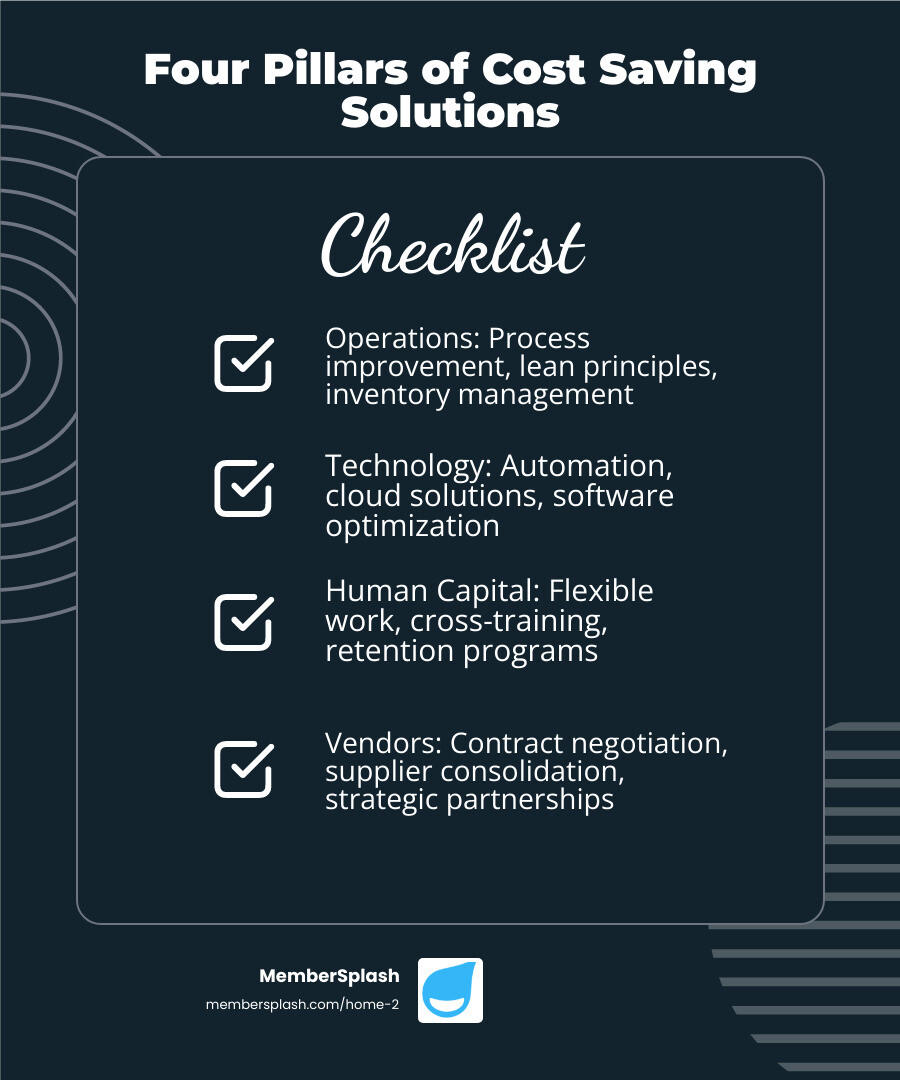
This guide breaks down practical, proven cost saving solutions across four key areas: operations, technology, human capital, and vendor management. The focus is on actionable strategies you can implement starting today.
First, Find the Leaks: Analyzing Your Cost Structure
Before you can plug the leaks, you need to know where they are. That means diving deep into your current cost structure. Think of it like a financial detective mission. Start by categorizing expenses into fixed costs (like rent or salaries) and variable costs (like utilities or supplies that fluctuate with usage). Identifying your key cost drivers, the activities or resources that cause costs to increase, is essential.
Benchmarking your costs against industry standards is another powerful tool. A report by PWC highlights that benchmarking is a strategic tool to assess performance and cost position relative to competitors and industry standards. This helps you see if you are paying too much for certain services compared to similar organizations in Annapolis, Baltimore, or elsewhere in the United States. Data analytics then becomes your magnifying glass, helping you spot spending patterns, identify inefficiencies, and make informed decisions.
A great way to challenge existing spending habits is through Zero-Based Budgeting (ZBB). Unlike traditional budgeting, which often just tweaks the previous year’s figures, ZBB requires every expense to be justified from scratch. It asks, “If we were starting fresh, would we still spend money on this?”
| Feature | Traditional Budgeting | Zero-Based Budgeting (ZBB) |
|---|---|---|
| Starting Point | Previous year’s budget | Zero (every expense must be justified) |
| Focus | Incremental adjustments, control over spending | Justification of every expense, resource allocation efficiency |
| Review | High-level, often focuses on variances | Detailed, deep dive into activities and costs |
| Flexibility | Limited, tends to perpetuate past inefficiencies | High, encourages innovation and elimination of non-value activities |
| Outcome | Cost control, often misses opportunities for significant savings | Cost optimization, strategic resource allocation, efficiency gains |
How to conduct a cost-benefit analysis
Once you have identified potential areas for savings, you need to evaluate them. This is where a cost-benefit analysis comes in. It helps you weigh potential savings against the effort and resources required for implementation. Identify opportunities, then rank your strategies based on their potential impact and ease of execution.
For example, implementing a new member management software might have a high upfront cost but offer significant long-term savings in administrative time and increased revenue capture. You might test changes on a small scale, perhaps with one club location, to identify any hidden costs or unforeseen challenges before rolling them out widely. Tools that provide custom reports, like MemberSplash, can be invaluable here, offering granular data to track the real impact of your decisions. You can learn more about how custom reports can help you track these metrics.
Uncovering unconventional savings with shadow budgeting
Beyond the obvious, there are often unconventional avenues for cost savings. One such strategy is shadow budgeting. This involves creating a secondary “what-if” budget for every major project or initiative to anticipate unplanned expenses. By comparing this shadow budget to your actual expenses, you can identify patterns in unexpected spending and pinpoint ways to eliminate them in the future.
For instance, if you are planning a pool renovation, a shadow budget would include contingencies for unexpected material costs, labor overruns, or permit delays. Over time, this practice helps you adapt project scopes, renegotiate contract terms, or adjust resource allocation to prevent future cost surprises. It is about foresight, not just hindsight.
Streamline Your Operations and Workforce for Maximum Efficiency
Efficiency is a cornerstone of effective cost saving solutions. By streamlining operations, you reduce waste, optimize resource utilization, and ultimately save money.

Process improvement is central to this. You can adopt lean principles, which focus on eliminating waste in all its forms, whether wasted time, materials, or effort. Methodologies like the 5S methodology (Sort, Straighten, Shine, Standardize, Sustain) help organize physical and digital workspaces, leading to greater productivity and fewer errors.
Inventory management is another critical area, especially for clubs or HOAs that stock supplies for maintenance or concessions. Keeping too much inventory ties up cash and increases storage costs, while too little can lead to stockouts and lost sales. A just-in-time (JIT) inventory system helps balance these needs by ensuring you receive supplies only when needed, minimizing storage and waste.
Even your physical environment offers opportunities. Strategically managing expenses related to real estate, facilities, and utilities can yield significant savings. Conducting energy audits, for example, can reveal areas where you can improve efficiency, such as upgrading to LED lighting or optimizing HVAC systems, leading to lower utility bills. For organizations with multiple locations, like pool management companies in Maryland, these savings can really add up.
Optimizing human capital without sacrificing morale
People are a critical asset, and it is important to optimize human capital without compromising employee morale or productivity. This is not about cutting corners on your team; it is about working smarter.
Flexible work arrangements are a prime example. Offering remote or hybrid work options, when applicable, can significantly reduce overhead costs tied to office space and utilities. One study found that employees were 24% more productive after switching from office to fully remote work. Productive employees are less likely to leave, and that is a major cost saver, because hiring a new full-time employee costs $4,700 on average. Focusing on employee retention through competitive benefits, career development, and a positive work culture helps you avoid these significant recruitment and training costs.
Cross-training employees is another smart move. It ensures that if one team member is absent, others can cover their tasks, preventing downtime and the need for expensive external help. Strategic staffing, using data to match your workforce to demand, also helps avoid overstaffing during slow periods. For managing member accounts, a robust member account database can help streamline processes and reduce the manual effort required from your team.
The impact of remote and hybrid work models
The shift to remote and hybrid work models has important implications for business costs. For many organizations, it means reduced overhead from smaller office footprints, lower utility bills, and fewer office supplies. In the United States, nearly 35% of Americans in management, professional, and related occupations are hybrid or exclusively working from home.
While a full-time remote model might not be feasible for all aspects of club or pool management, embracing hybrid options where possible can be a game-changer. Beyond cost savings, flexible work arrangements can lead to increased job satisfaction, which in turn can reduce turnover and support a more stable, productive workforce. Investing in technology to keep remote teams connected and productive helps maintain seamless operations regardless of location.
The Ultimate Guide to Cost Saving Solutions Through Technology
Technology is not just about innovation; it is a powerful engine for cost saving solutions. By strategically leveraging digital tools, you can automate processes, reduce errors, and gain valuable insights into your spending.
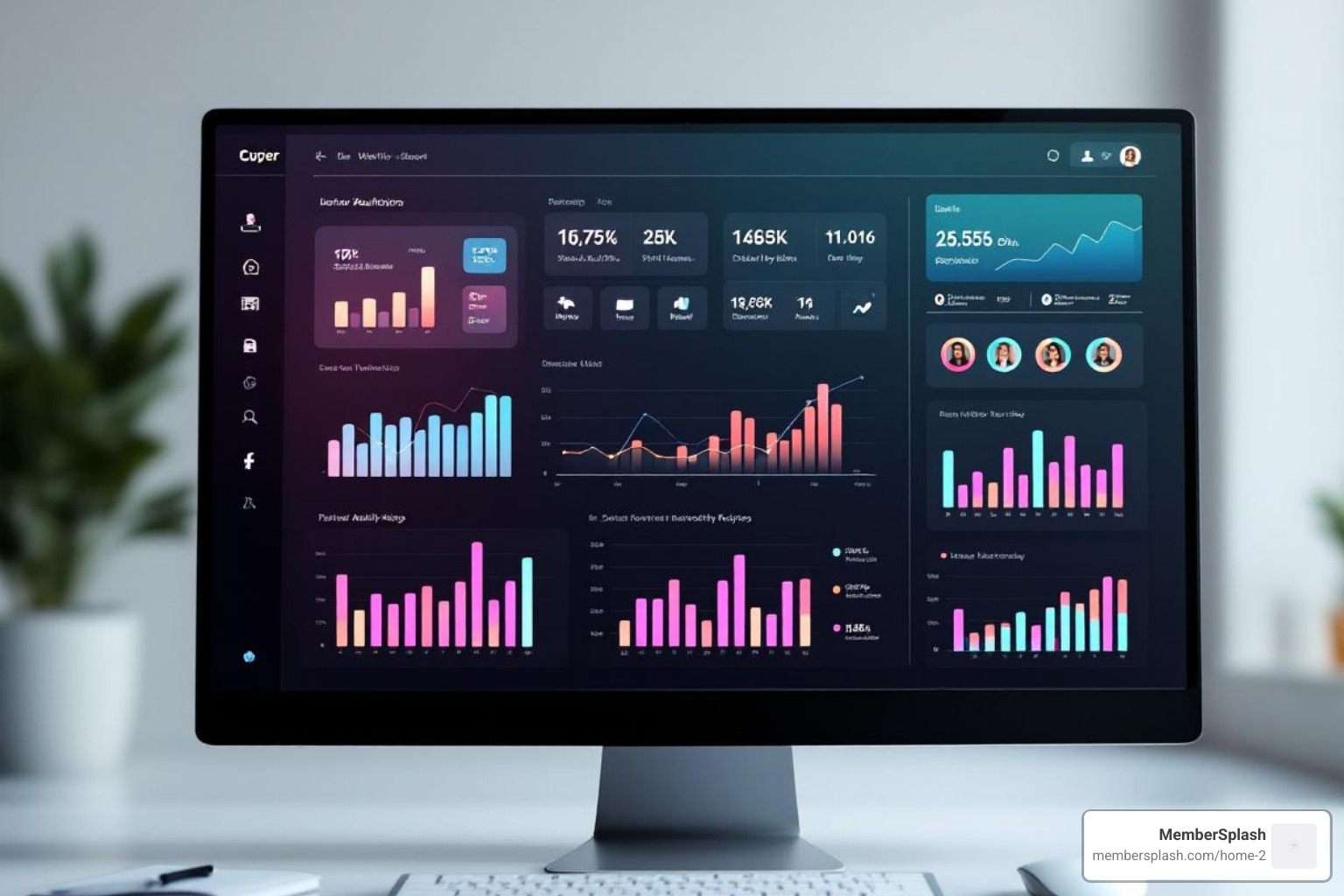
A thorough software stack audit is a great place to start. Identify applications with overlapping functionality, tools with low user adoption, and licenses for former employees. Replace legacy software that requires expensive maintenance and frequent patches with modern, cloud-based solutions that offer better security, scalability, and consistent updates. Gartner states that organizations can cut software costs by 30 percent by optimizing configurations and recycling licenses.
Cloud cost management is also vital, especially for organizations utilizing public cloud infrastructure. More than three-quarters of enterprises estimate that between 21% and 50% of their cloud spending is wasted due to inadequate management. You can implement strategies like rightsizing (aligning cloud instances with workloads), using reserved instances for predictable usage, and leveraging spot instances for non-critical tasks to optimize cloud spend. Robust cybersecurity measures are also a cost-saving solution, protecting you from costly data breaches and reputational damage.
Leveraging automation for powerful cost saving solutions
Automation is one of the most impactful cost saving solutions available today. Repetitive tasks, from data entry and invoicing to membership renewals and report generation, are prime candidates for automation. These are often low-impact tasks that consume significant staff time.
The potential return on investment is substantial. According to a meta-analysis conducted by the London School of Economics, accounting automations can yield an ROI of up to 200% in the first year. Robotic Process Automation (RPA), for instance, can handle these routine tasks with improved accuracy, freeing up team members to focus on higher-value activities that require human judgment and creativity. For your members, this can mean faster online payment processing and quicker service.
Optimizing your digital toolkit and subscriptions
It is easy for a digital toolkit to become bloated. Many organizations sign up for free trials, forget about them, and then realize they have been paying for subscriptions they do not use. Optimizing your digital toolkit means regularly reviewing and reducing unnecessary subscriptions.
Look for opportunities to consolidate tools that perform similar functions and eliminate redundant software. Recycling licenses for software when employees leave or roles change is another simple yet effective cost saver. It is also helpful to review subscription tiers to ensure you are not paying for premium features you rarely use. For membership organizations, tools that offer check-in photo verification can streamline operations and reduce potential fraud, leading to indirect cost savings.
Master Your External Spending: Vendors, Marketing, and Contracts
Your relationships with external partners, including vendors, suppliers, and marketing channels, represent significant spending. Managing these areas effectively is crucial for comprehensive cost saving solutions.
Supplier consolidation can lead to better pricing through increased volume. Instead of working with multiple vendors for similar products or services, you can centralize purchases with fewer, more reliable partners. E-procurement software can automate the purchasing process, improve spend visibility, and help identify opportunities for consolidation or negotiation. Building strategic partnerships, rather than just transactional relationships, can also open up added value beyond pricing alone.
When it comes to marketing and sales, the goal is to maximize ROI. Use CRM data to understand customer segments and tailor marketing efforts for maximum impact. Effective communication with members, for example through bulk email communication, helps retain them and avoid the higher costs of acquiring new ones.
The art of renegotiating contracts and leases
Many businesses overlook the potential within their existing contracts. Conducting an annual contract review with vendors and service providers can uncover major savings. This is not just about asking for a lower price; it is about leveraging buying power, understanding current market conditions, and negotiating for better terms or added value.
The potential savings from successful contract renegotiation can be significant. According to a World Commerce & Contracting study, companies can save an average of 9.2% on their total contract value through effective negotiation. This might involve extending payment terms to improve cash flow or even reducing total square footage if an office lease allows for it, especially if you have adopted hybrid work.
Effective marketing and sales cost saving solutions
Marketing and sales are essential for growth, but they do not have to consume your entire budget. Focus on achieving better ROI for your spend. This often means concentrating on high-ROI channels, which for many membership organizations include digital marketing and targeted outreach.
Use data-driven campaigns so every dollar spent works harder. Customer segmentation helps you reach the right audience with the right message, avoiding wasteful broad-stroke advertising. Sales force optimization, through training and efficient processes, ensures your team is converting leads effectively. Leveraging a cold emailing tool can also streamline lead generation efforts by enabling targeted outreach, automating follow-ups, and tracking engagement to convert prospects more efficiently.
Making Savings Stick: Metrics, Culture, and Overcoming Problems
Implementing cost saving solutions is one step; making them a permanent part of your business strategy is another. This requires diligent tracking, a cost-conscious culture, and proactive problem solving.
Use a suite of financial metrics, such as gross profit margin, operating profit margin, and ROI, to measure the direct impact of your initiatives. Beyond finances, track operational KPIs like labor productivity, cycle time, and resource utilization. Customer satisfaction scores, such as Net Promoter Scores (NPS), are critical to ensure cost-cutting measures are not negatively impacting the member experience. It is also important to monitor employee engagement and turnover rates, because a demotivated workforce can quickly erode any savings.
Implementing new strategies always comes with challenges. Change management is often the biggest hurdle. You can address this by being transparent with your team about the “why” behind cost-saving efforts and involving them in the process. Quality control should be maintained by focusing reductions on inefficiencies, not on essentials. Address employee morale proactively so your team feels valued and understands how these changes contribute to shared success.
How to foster a cost-conscious culture
An effective cost-saving strategy is not just top-down; it is embedded in organizational culture. Aim to foster a cost-conscious culture where every employee feels empowered and responsible for identifying savings opportunities.
This starts with leadership buy-in and clear communication. Explain why cost management is important for long-term stability and the ability to invest in growth and your team. Involve employees in the process, solicit their ideas, and provide training on cost-saving practices relevant to their roles. Recognition programs that reward innovative cost-saving suggestions can reinforce this mindset. Transparency in your financial situation, shared in an accessible way, helps everyone understand the impact of their actions. The objective is to cultivate a continuous improvement mindset where efficiency is a shared goal, not just a directive.
Frequently Asked Questions about Cost Reduction
What is the difference between cost reduction and cost avoidance?
This is a key distinction! Cost reduction refers to eliminating or decreasing existing expenses. For example, renegotiating a vendor contract to pay less for the same service is cost reduction. It directly impacts our current bottom line.
Cost avoidance, on the other hand, is about preventing future costs from occurring. For instance, investing in preventive maintenance for our pool equipment avoids the much larger, unexpected cost of a major breakdown or replacement. Similarly, implementing a new member management software now might prevent the future costs of hiring more administrative staff as we grow. Both are crucial for our financial health, but they address different aspects of spending.
How can a small business start saving money today?
For a small business, starting with high-impact, low-effort changes is best.
- Audit subscriptions: Cancel any unused software or services.
- Renegotiate small contracts: Even phone or internet bills can often be reduced.
- Go paperless: Reduce printing and mailing costs.
- Energy efficiency: Turn off lights, unplug electronics, use smart thermostats.
- Review processes: Look for any manual, repetitive tasks that could be simplified or automated.
- Track spending: Use a simple expense tracking tool to see where money is actually going.
These small steps can quickly add up and build momentum for larger cost saving solutions.
What are the biggest mistakes companies make when cutting costs?
One of the biggest mistakes is making impulsive, across-the-board cuts without a thorough analysis. This often leads to cutting “muscle” instead of “fat,” impacting quality, employee morale, or crucial growth initiatives. For example, cutting staff without optimizing processes first can lead to burnout and decreased service quality.
Another common error is failing to measure the impact of cost reduction strategies. Without proper metrics, we don’t know if our efforts are actually saving money or causing unintended negative consequences. Lastly, neglecting to foster a cost-conscious culture means that any savings achieved are often temporary, as old habits quickly creep back in. True savings come from strategic, data-driven decisions and an engaged, efficient team.
Conclusion: Building a Future of Financial Efficiency
Navigating the financial landscape requires foresight, agility, and a commitment to continuous improvement. This article has explored a wide array of cost saving solutions, from analyzing expenditures and streamlining internal operations to leveraging technology and managing external spending.
The key idea is that true financial efficiency does not come from arbitrary, across-the-board cuts, but from smart, strategic adjustments. It is about optimizing resources, eliminating waste, and equipping your team with the tools and culture needed to thrive. For membership-based organizations, this means embracing solutions that simplify complex tasks, capture revenue efficiently, and free up valuable human capital for what truly matters: serving members.
By implementing these strategies, your organization can become more resilient, profitable, and sustainable. To explore how MemberSplash can support these goals, see how it can help you maximize efficiency and savings with the right management solution.