Your Portal to Paradise: Unlocking the Power of Resident Self-Service
Why Resident Self-Service Portals Matter in Today’s Digital World
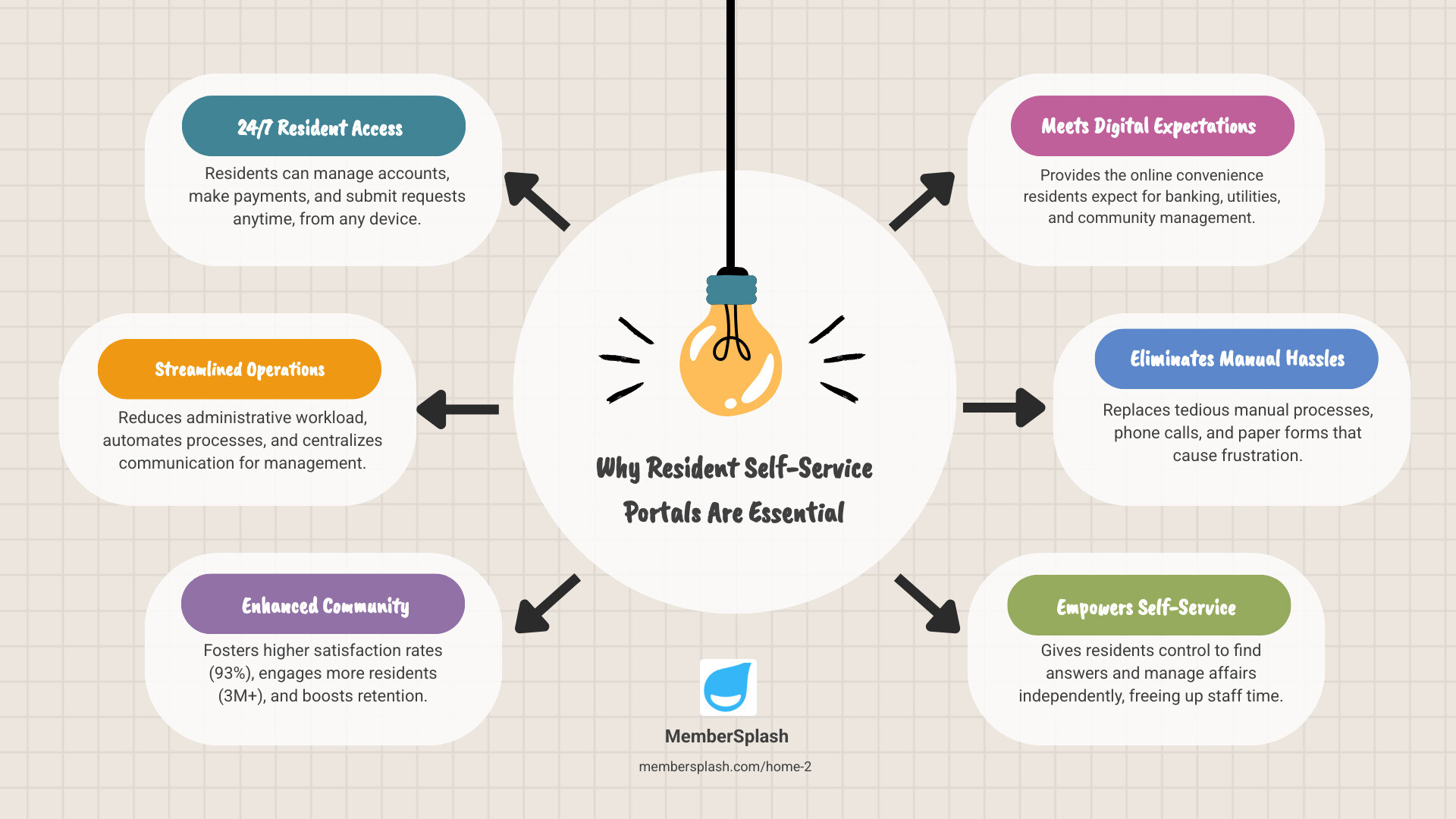
A Resident self-service portal is a centralized online platform that allows residents to manage their accounts, make payments, submit requests, and communicate with property management 24/7 without staff intervention. Here’s what makes them essential:
Core Benefits:
- For Residents: 24/7 access to account information, online payments, maintenance requests, and community updates from any device
- For Management: Reduced administrative workload, automated processes, faster payment collection, and centralized communication
- For Communities: Higher satisfaction rates (93% average), improved retention, and stronger engagement across 3M+ residents
Today’s residents do everything online. They expect the same convenience for managing their community membership that they get from their bank, their utility company, or their favorite retailer.
Yet many HOAs, clubs, and pool management companies still rely on manual processes. Board members field phone calls about account balances. Managers chase down paper forms. Residents wait days for simple answers about their membership status or guest policies.
This disconnect creates frustration on both sides. Residents feel ignored when they can’t get quick answers. Management teams drown in repetitive tasks that pull them away from more important work.
The solution isn’t just about going digital. It’s about giving residents the power to help themselves while freeing up your team to focus on what matters most: building a thriving community.
As one resident noted after their community implemented a self-service portal: “It was the best experience in 17 years at their property” – citing the professionalism, punctuality, and ease of interaction.
What is a Resident Self-Service Portal and Why is it Essential?
At its heart, a Resident self-service portal is a dedicated online hub that empowers residents to manage various aspects of their community life independently. Think of it as a digital concierge, always available, always ready to assist. This isn’t just a fancy website; it’s a strategic tool designed to facilitate seamless interactions between residents and their community management.
The primary goal of a resident self-service portal is to offer 24/7 access to essential services and information. In today’s world, convenience is king, and residents expect to handle their affairs on their own terms, whether that’s late at night or early in the morning, from their computer or their phone. This constant availability significantly reduces the need for direct staff intervention for routine inquiries, leading to a dramatic streamlining of operations.
By embracing a Resident self-service portal, organizations can automate many of the repetitive administrative tasks that often bog down staff. From processing payments to managing maintenance requests, the portal handles the heavy lifting, freeing up your team to focus on more complex issues and community-building initiatives. This shift towards automation and self-service not only cuts down on manual workload but also drastically increases overall efficiency for property managers and community associations. For more insights on maximizing efficiency and savings, explore our management solutions.
Core Functionalities of a Modern Portal
A truly effective and modern Resident self-service portal offers a comprehensive suite of functionalities designed to meet the diverse needs of residents and simplify management tasks. These core features are what make a portal invaluable:
- Account Management: This is the bedrock of any self-service portal. Residents can access and update their personal information, view their membership status, and manage their family details. A robust Member Account Database ensures all resident data is centralized and easily accessible.
- Document Access: Imagine residents no longer needing to call or email for a copy of the community bylaws, pool rules, or their lease agreement. Portals allow for easy access to important documents, contracts, and community policies, ensuring transparency and reducing administrative inquiries.
- Profile Updates: Life happens! Residents can update their contact information, add new family members, or change their preferences directly through the portal, ensuring that management always has the most current data.
- Communication History: A clear record of all past communications, including submitted requests and responses, helps residents stay informed and prevents misunderstandings.
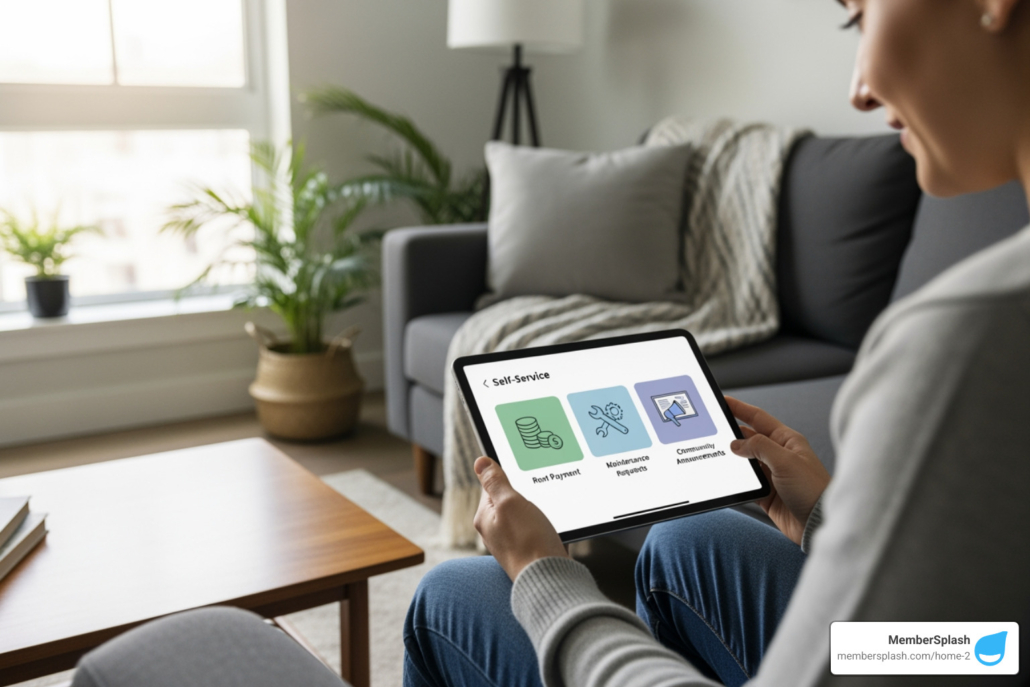
- Maintenance Requests: Residents can submit maintenance requests online, often with the ability to attach photos or videos. They can then track the status of their request, from submission to completion, eliminating the need for follow-up calls. This functionality is crucial for properties, ensuring residents can easily log maintenance queries and receive updates on their status.
- Online Payments: One of the most popular features, allowing residents to pay dues, rent, or other fees securely online. This dramatically improves payment collection rates and provides convenience for residents.
- Communication Tools: Beyond just requests, portals often include messaging systems that allow residents to interact with staff, participate in community forums, or receive important announcements.
These functionalities empower residents to take control of their interactions with community management, fostering a sense of ownership and convenience.
Types of Resident Self-Service Portals
While the core concept remains the same, Resident self-service portals are adaptable and can cater to a variety of residential settings. The specific features and emphasis might shift depending on the community type:
- HOA & Community Associations: For Homeowners Associations, a portal is essential for managing dues, sharing community documents like meeting minutes and covenants, booking shared amenities (like clubhouses or tennis courts), and facilitating communication among residents and the board. Our HOA Property Management Solutions are designed with these specific needs in mind.
- Apartment Complexes: In apartment communities, portals often focus on rent payments, maintenance requests, lease renewals, and community event notifications. They become a vital tool for both residents and property managers in large-scale residential buildings.
- Government Services: Even local governments in areas like Annapolis, MD, and Baltimore, MD, use self-service portals to streamline citizen interactions. These portals might allow residents to pay utility bills, apply for permits, access public records, or report civic issues. The Citizen Self-Service (CSS) Instruction Library for Annapolis, MD, serves as a great example of a city services portal, demonstrating how government entities empower their constituents with self-service options. Similarly, Baltimore City offers online payment and account lookup services, as well as a self-service portal, highlighting the widespread adoption of this technology for public convenience.
- University Housing: For college campuses, resident portals are key for room selection, managing housing applications, booking appointments for move-in/move-out, reporting concerns, and accessing campus-specific resources.
- Swim and Tennis Clubs: These organizations leverage portals for membership management, facility reservations, guest tracking, event registration, and fee collection. Our Swim and Tennis Club Solutions provide custom features for these dynamic environments.
Regardless of the specific type of residential community, the underlying principle of a Resident self-service portal is to improve convenience for residents and efficiency for management.
The Dual Advantage: Benefits for Residents and Management
Implementing a Resident self-service portal isn’t just a nice-to-have; it’s a strategic move that creates a genuine win-win scenario for everyone involved. Residents gain unparalleled convenience and control, while property managers achieve operational excellence and improved community health.

This symbiotic relationship leads to increased satisfaction across the board, higher resident retention rates, and a more smoothly running operation. It’s a testament to the power of technology when applied thoughtfully to community management.
Empowering Your Residents
For residents, a self-service portal is nothing short of empowering. It puts control directly into their hands, allowing them to manage their living experience on their own terms.
- 24/7 Convenience: Residents can access their accounts, make payments, or submit requests at any time, day or night, from any device. This flexibility accommodates busy schedules and diverse lifestyles, eliminating the need to wait for office hours. Offering a simple online experience is no longer a convenience; it’s a necessity because today’s residents do everything online.
- Self-Service Control: From updating personal information to viewing important documents and signing contracts, residents have the autonomy to handle their administrative tasks. This reduces friction and gives them a sense of ownership over their community interactions.
- Transparency on Payments and Requests: Residents can view their payment history, current balances, and the status of any maintenance requests or amenity bookings. This transparency builds trust and reduces inquiries about pending items.
- Improved Communication: Portals provide a direct, streamlined channel for residents to interact with staff, report concerns, or receive updates. This structured communication is often more efficient than phone calls or emails, and tools allow residents to interact with staff via communication tools.
- Improved Community Connection: By offering a centralized hub for information, events, and communication, the portal helps residents feel more connected to their community. They can see upcoming events, communicate with neighbors (if features allow), and stay informed about community news. This improved engagement contributes to the impressive 93% Resident Satisfaction statistic often seen with effective portals, and contributes to the 3M+ engaged residents we aim for.
Streamlining Your Operations
While residents bask in the glow of convenience, property managers and community associations reap significant benefits on the operational front. A Resident self-service portal transforms daily tasks, making management more efficient and effective.
- Reduced Administrative Workload: Imagine the time saved when residents handle their own account updates, payment processing, and basic inquiries. This automation frees up your team from repetitive tasks, allowing them to focus on more complex issues, community events, or personalized resident interactions. These portals automate key property management tasks and streamline operations.
- Centralized Data: All resident information, communication logs, payment records, and service requests are consolidated in one secure location. This eliminates data silos, improves accuracy, and provides a single source of truth for your team.
- Faster Payments: Online payment options, especially with features like auto-pay, significantly accelerate rent and fee collection. This improves cash flow and reduces the time spent chasing overdue payments.
- Improved Efficiency: With automated workflows and 24/7 access, processes that once took days can now be completed in minutes. This leads to faster response times for residents and a more agile management team. With over 1.6M+ properties live utilizing such platforms, the impact on efficiency is undeniable.
- Higher Retention Rates: By providing an excellent resident experience through convenience and efficient service, portals contribute directly to higher resident satisfaction and, consequently, better retention. This helps strengthen your reputation, improve satisfaction, and retain residents longer, reducing turnover costs. This is a crucial benefit, as retaining residents is often more cost-effective than acquiring new ones.
A comprehensive view of all the features that contribute to this operational streamlining can be found by exploring our feature overview.
Choosing the Right Platform: Key Features of a Top-Tier Resident Self-Service Portal
Selecting the ideal Resident self-service portal is a critical decision for any community. It’s not just about having a portal; it’s about having the right portal. A top-tier platform should be scalable, user-friendly, and mobile-responsive, ensuring it can grow with your community and serve all residents effectively. Look for a solution that offers flexibility and scalability without requiring extensive custom development, and one that is designed to be responsive and accessible across all devices.
Essential Financial and Payment Features
The financial aspects of community management are often the most time-consuming. A robust Resident self-service portal should simplify these processes for both residents and staff:
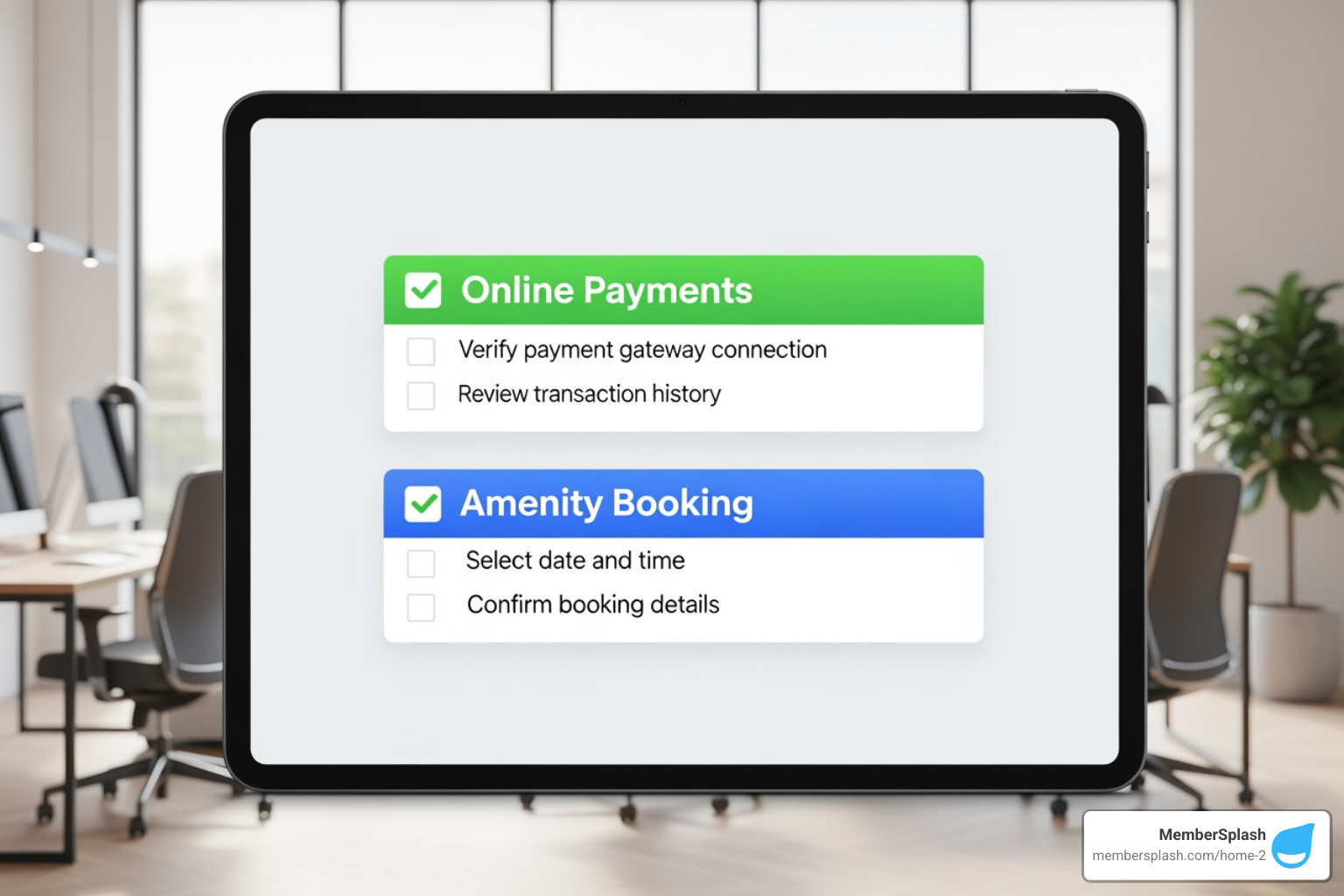
- Online Payments: This is non-negotiable. Residents should be able to pay dues, rent, guest fees, or other charges securely online using various methods like credit cards, debit cards, or ACH. Our Secure Payment Processing ensures these transactions are safe and efficient. For organizations and patrons utilizing billing services, comply with the PoolPass Billing Terms and Conditions.
- Auto-Pay Options: Offering recurring payment options significantly increases on-time payments and reduces the need for manual processing.
- Financial Reporting: For management, the portal should provide clear, actionable reports on payment statuses, outstanding balances, and transaction histories, simplifying reconciliation.
- Guest Fee Management: For clubs and HOAs with amenities, the ability to manage and collect fees for guests directly through the portal is invaluable. Our Guest Tracking & Payment feature streamlines this process.
Communication and Engagement Tools
Beyond transactions, a Resident self-service portal excels at fostering a connected and informed community. Effective communication is key:
- Community Calendars: A centralized calendar keeps residents informed about upcoming events, board meetings, amenity closures, or holiday schedules. Our Events Calendar feature makes this easy.
- Bulk Email & SMS: The ability to send mass communications directly through the portal ensures important announcements reach all residents quickly. This is perfect for emergencies, policy updates, or event reminders. Explore our Bulk Email Communication tools.
- Digital Forms: From amenity reservation requests to feedback surveys, digital forms simplify data collection and reduce paper waste.
- Amenity Bookings: Allowing residents to reserve common areas, sports courts, or other facilities online minimizes conflicts and streamlines resource allocation. Our Reservation System provides a seamless experience for this.
Customization and Security for Your Resident Self-Service Portal
A truly effective Resident self-service portal isn’t just functional; it’s also secure and feels like an integral part of your community’s brand.
- Branded Portal: A portal that reflects your community’s branding – with your logo, colors, and specific messaging – creates a cohesive and professional experience for residents. This makes the portal feel like their portal, not just a generic platform.
- Custom Forms: The ability to create custom forms custom to your specific needs, whether for new member registration, volunteer sign-ups, or specific requests, adds immense flexibility.
- Role-Based Access: Not all users need access to the same information. Role-based access ensures that residents, board members, and staff only see the information relevant to their permissions.
- Data Encryption: Protecting sensitive resident data is paramount. A top-tier portal employs robust data encryption and security protocols to safeguard personal and financial information. The highest level of security, with input verification at every step, is a must-have.
- Photo Verification for Check-in: For facilities like pools or gyms, integrating photo verification adds an extra layer of security and efficiency. Our Check-in Photo Verification feature ensures only authorized individuals gain access.
From Plan to Portal: Implementation and Adoption
Starting on the journey from planning to a fully functional Resident self-service portal requires a clear roadmap. It involves careful consideration of data migration, thorough onboarding, comprehensive user training, and proactive strategies to overcome potential challenges. The goal is a smooth transition that maximizes the benefits for both your team and your residents.
Integration and Setup
The success of your Resident self-service portal often hinges on how seamlessly it integrates with your existing operations and systems.
- Integration with Existing Software: A robust portal should be able to integrate with other property management software or accounting systems you already use. This ensures data consistency and avoids duplicate data entry, creating a unified ecosystem for your management tasks.
- Data Migration Support: Moving existing resident data to a new platform can seem daunting. Look for providers that offer comprehensive data migration support, ensuring a smooth and accurate transfer of information.
- Onboarding Assistance: A good vendor won’t just hand you the keys; they’ll walk you through the setup process, configure the portal to your specific needs, and provide initial training. Our Supported Implementation ensures you’re never alone in this process.
- Customization Options: While a widget-based design allows for easy setup, the ability to customize the portal’s appearance and functionality to match your community’s unique identity is crucial for user adoption and branding.
Overcoming Challenges and Ensuring Security
While the benefits are plentiful, organizations must be aware of potential challenges and prioritize security when implementing a Resident self-service portal.
- Potential Drawbacks: Initial resistance from residents or staff unfamiliar with new technology can be a hurdle. We address this through user-friendly design and comprehensive support.
- Data Security Protocols: Protecting residents’ personal and financial information is paramount. The portal must use robust data encryption, firewalls, and secure servers. It’s crucial to understand the terms and conditions governing data use and protection.
- PCI Compliance: For any portal handling payments, adhering to Payment Card Industry Data Security Standard (PCI DSS) compliance is non-negotiable. This protects cardholder data and ensures secure transactions. Organizations are responsible for their own PCI compliance.
- User Privacy: Clear policies on how resident data is collected, used, and shared must be in place and easily accessible. For a detailed understanding of these requirements, review an Example of Portal Terms and Conditions to ensure your chosen solution aligns with strict privacy standards.
- Staff Training: Proper training for your management team is essential to ensure they can effectively use the portal, assist residents, and troubleshoot minor issues.
Driving User Adoption for Your Resident Self-Service Portal
Building a fantastic Resident self-service portal is only half the battle; getting residents to use it is the other. User adoption is key to realizing the full return on investment.
- Launch Campaign: Don’t just launch it and hope for the best! Create an exciting launch campaign to introduce the portal to residents. This could include emails, flyers, social media announcements, and even a launch event.
- Clear Instructions: Provide easy-to-follow guides, FAQs, and video tutorials on how to register and use the portal’s key features. Make it as simple as possible for residents to get started. Implicit CTAs like “Need to sign up?” and “Forgot Password?” are crucial initial entry points.
- Highlighting Benefits: Clearly communicate how the portal will make residents’ lives easier. Emphasize the 24/7 convenience, the ability to track requests, and the ease of online payments.
- Gathering Feedback: Encourage residents to provide feedback on their experience. This not only helps identify areas for improvement but also makes residents feel heard and valued.
- Ongoing Promotion: Regularly remind residents about the portal and its features. Highlight new functionalities, share success stories, and integrate portal usage into everyday community communications.
The Future of Resident Engagement
The landscape of resident engagement is constantly evolving, and Resident self-service portal technology is at the forefront of this change. We anticipate exciting advancements that will make community living even more connected and convenient.
Imagine a future where AI-powered support chatbots can instantly answer resident questions, freeing up staff for more complex tasks. Picture seamless smart home integration, allowing residents to manage their unit’s smart devices, submit maintenance requests, and even receive package delivery notifications all through their portal. Mobile-first design will continue to dominate, with portals becoming even more intuitive and feature-rich on smartphones and tablets.
Predictive analytics for maintenance could foresee potential issues before they become major problems, allowing for proactive repairs and minimizing resident inconvenience. Hyper-personalization will tailor the portal experience to each resident, offering relevant information, events, and services based on their preferences and history. These advancements will contribute to even stronger community-building tools, fostering deeper connections and a more harmonious living environment for everyone.
Frequently Asked Questions about Resident Portals
We understand you might have questions about how a Resident self-service portal can specifically benefit your community. Here are some common inquiries we encounter:
How much time can a portal really save our management team?
The time savings can be substantial! By automating routine tasks, a portal frees up your team from numerous manual processes. Think about:
- Automation of Payments: Online payments and auto-pay options drastically reduce the time spent processing checks, sending reminders, and reconciling accounts. An automated and flexible billing system removes a significant manual burden on staff.
- Digital Registration & Applications: Moving these processes online eliminates paper forms, manual data entry, and follow-up calls for incomplete information.
- Reduced Phone Calls and Emails: Residents can find answers to common questions, check account balances, or track maintenance requests themselves, significantly cutting down on inbound inquiries.
- Centralized Communication: Instead of scattered emails and phone calls, all communications are streamlined through one platform, making it easier to track and respond.
- Streamlined Reporting: Automated financial and activity reports save hours of manual data compilation.
Overall, a portal can transform your team’s efficiency, allowing them to focus on resident satisfaction and community development rather than administrative drudgery.
Is it difficult for non-technical residents to use?
Not at all! Modern Resident self-service portals are designed with user-friendliness as a top priority.
- User-Friendly Design: Intuitive interfaces, clear navigation, and straightforward language make portals accessible even for those who aren’t tech-savvy.
- Mobile Access: Most residents interact with digital services via their smartphones. A responsive and accessible design ensures the portal works seamlessly on any device.
- Clear Instructions: Comprehensive help sections, FAQs, and perhaps even quick video tutorials guide residents through each feature.
- Onboarding Support: A good implementation plan includes resources to help residents get started, such as a dedicated launch campaign and direct support channels.
- Intuitive Navigation: Features are logically organized, making it easy for residents to find what they need without extensive searching. The goal is a simple online experience that becomes a necessity.
What’s the ROI on a resident self-service portal?
The Return on Investment (ROI) for a Resident self-service portal is multifaceted, extending beyond just cost savings:
- Time Savings: As discussed, significant time is saved by automating tasks, allowing staff to be reallocated to more impactful work. This translates directly into labor cost efficiencies.
- Increased Revenue Capture: Easier online payment options, including auto-pay, lead to higher on-time payment rates and better overall revenue collection. For HOAs and clubs, managing guest fees through the portal also directly impacts revenue.
- Reduced Printing and Mailing Costs: Shifting communications, forms, and statements to digital channels drastically cuts down on material and postage expenses.
- Improved Resident Retention: Improved convenience and satisfaction directly contribute to higher resident retention rates. Reducing turnover costs is a significant financial benefit, as acquiring new residents is always more expensive than retaining existing ones.
- Improved Reputation: A modern, efficient community management system boosts your reputation, making your property more attractive to prospective residents.
While the exact numbers will vary by community, the combination of operational efficiencies, improved financial performance, and increased resident satisfaction makes the investment in a Resident self-service portal a smart financial decision. For a detailed breakdown and comparison of pricing plans, you can visit our Pricing Comparison page.
Conclusion: Build a Stronger, More Connected Community
A Resident self-service portal is no longer a luxury; it’s a fundamental necessity for any forward-thinking community, HOA, or club. We’ve seen how these powerful platforms bridge the gap between resident expectations and management capabilities, fostering a harmonious and efficient living environment.
From empowering residents with 24/7 access and control over their accounts to drastically streamlining operations for property managers, the benefits are clear. Increased resident satisfaction, higher retention rates, and unparalleled operational efficiency are not just aspirations but achievable realities with the right portal in place.
At MemberSplash, we understand the unique needs of communities in areas like Annapolis, MD, and Baltimore, MD. Our solutions are designed to help you harness the power of resident self-service, changing how your community operates and thrives. If you’re ready to open up these benefits and build a stronger, more connected community, we invite you to see our platform in action. Watch a Demo of MemberSplash today and find your portal to paradise.