
Streamline Success: How to Automate Membership Renewals and Billing Cycles
Why Manual Membership Renewals Are Costing You Time and Money
Automated membership renewals are systems that handle the entire renewal process—from sending reminders to processing payments—without manual intervention. Here’s what you need to know:
- They eliminate manual paperwork by digitizing renewal notices, invoices, and payment processing
- They reduce administrative burden by automatically tracking expiration dates and sending timely reminders
- They improve cash flow through recurring payments and predictable revenue streams
- They boost retention by ensuring members never miss a renewal due to forgetfulness
- They save significant time and cost—renewing 500 members manually costs over $1,000 and takes 172 hours, while automation requires virtually no time or cost
If you’re a club manager, HOA board member, or pool facility administrator, you know the drill. Spreadsheets. Manual invoices. Chasing down late payments. The renewal season brings a mountain of paperwork and countless hours tracking who’s paid, who’s overdue, and who quietly let their membership lapse.
Managing membership renewals manually is like trying to hold water in your hands—no matter how hard you try, something always slips through. Missed payments. Expired memberships. Members who wanted to renew but simply forgot. All while your staff drowns in administrative tasks that pull them away from actually serving your members.
The subscription economy has grown 4.6x faster than the S&P 500, and there’s a reason why. Organizations that automate their renewals see dramatic improvements in efficiency, revenue predictability, and member satisfaction. Your members are already accustomed to auto-renewal from their streaming services and software subscriptions. They expect the same convenience from you.
The good news? You don’t need to keep struggling with the manual grind. Modern membership management systems can automate your entire renewal process, from sending personalized reminders to processing payments to updating member status—all while you focus on creating value for your community.
The Manual Grind vs. The Automated Advantage
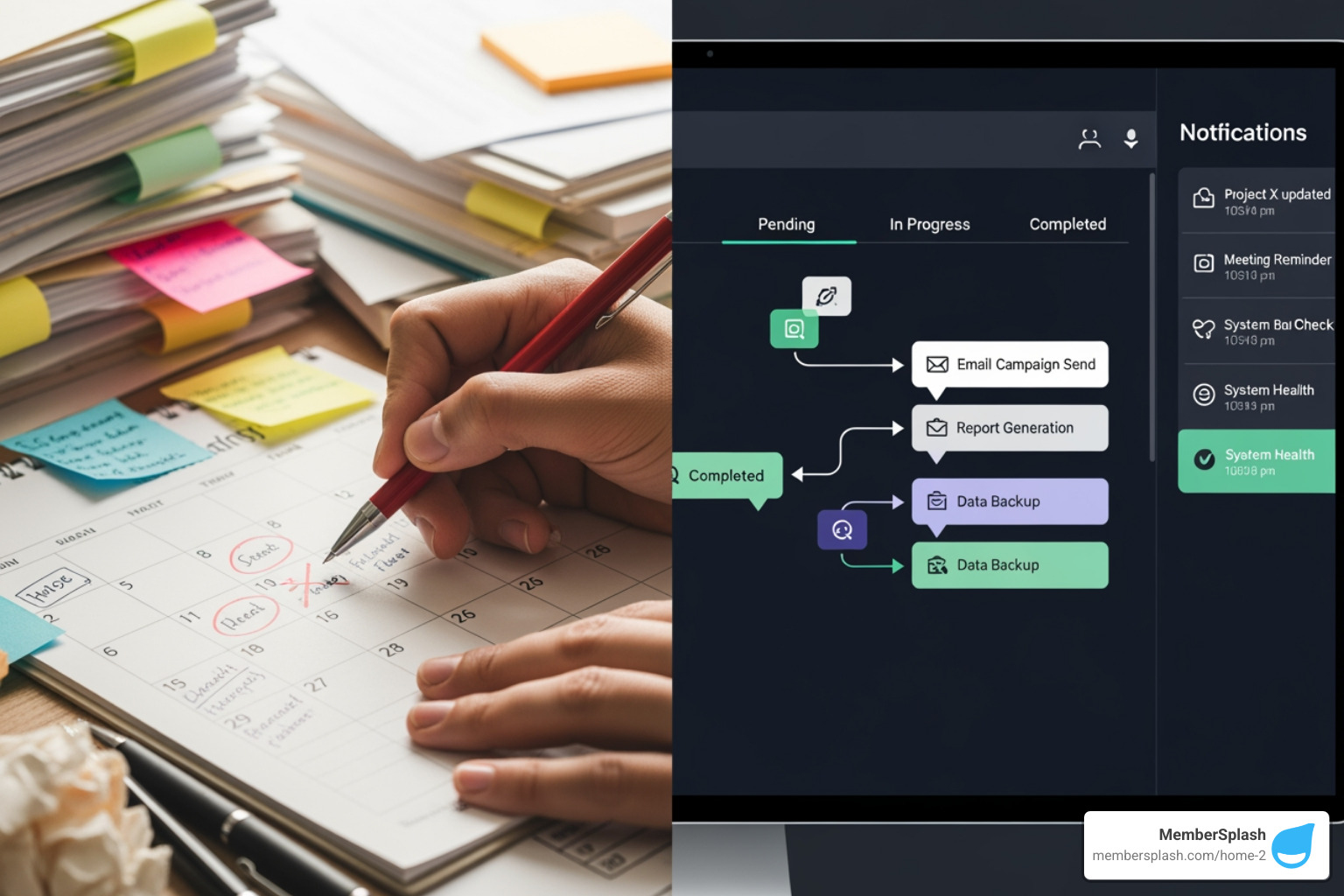
For years, many organizations, especially our beloved swim clubs, HOAs, and pool management companies, have relied on manual processes for membership renewals. This often involves physical mail, phone calls, and countless hours of data entry. While it might feel familiar, this traditional approach comes with a hefty price tag in terms of time, money, and missed opportunities.
Imagine the scene: a dedicated staff member, perhaps even a volunteer, carefully cross-referencing spreadsheets, printing invoices, stuffing envelopes, and then waiting for checks to arrive. This painstaking process is not only prone to human error but also incredibly time-consuming. Research suggests that renewing the memberships of just 500 members using traditional methods could cost over a thousand dollars and take an estimated 172 hours to complete. That’s nearly a full month of work for one person, just for renewals! This administrative burden distracts from more valuable tasks, like planning engaging events or improving member services.
Inconsistent revenue is another major headache. With manual renewals, payments trickle in, making it difficult to forecast income or plan for future club improvements. Members, too, can get frustrated by clunky, outdated systems. If renewing is a hassle, they might simply let their membership lapse, not because they don’t value your community, but because the process was too cumbersome.
Now, let’s pivot to the automated advantage. Automated membership renewals streamline the entire process, making it efficient, cost-effective, and far more pleasant for everyone involved. Instead of manual data entry, a smart system handles everything. Reminders are sent automatically, payments are processed securely online, and membership statuses are updated instantly. This dramatically reduces administrative hours and minimizes the risk of errors. Think of the peace of mind knowing your membership roster is always accurate and up-to-date.
The financial benefits are equally compelling. With automated systems, renewals can be processed at virtually no additional cost or time. This translates to significant cost savings, which can then be reinvested into your club or community. More importantly, automated renewals lead to greater revenue predictability. When payments are recurring and renewals are timely, you have a clearer picture of your financial health, enabling better budgeting and strategic planning. We’ve seen how this shift can transform an organization’s operations and financial stability.
Why Members and Staff Both Prefer Automation
The preference for automation isn’t just about organizational efficiency; it’s deeply rooted in the desire for convenience for both members and staff.
For members, automation means uninterrupted access to the benefits they love. No more scrambling to remember renewal dates or worrying about their access being cut off. With automated systems, they can opt for recurring payments, ensuring their membership continues seamlessly, much like their favorite streaming services. Self-service portals allow them to update their payment information, view their membership status, and manage their details at their convenience, 24/7. This level of convenience significantly improves their overall experience, fostering satisfaction and loyalty. 83% of B2B buyers prefer rep-free transactions, highlighting a clear preference for self-service options. Your members are no different. They want to renew on their terms, quickly and easily.
For your dedicated staff and volunteers, automation is a game-changer. It dramatically reduces the workload associated with manual renewals—no more chasing payments, printing invoices, or endless data entry. This frees them up to focus on what truly matters: engaging with members, organizing fantastic events, and building a vibrant community. By offloading repetitive administrative tasks, your team can dedicate their energy to value-add activities, making their roles more fulfilling and impactful. We believe that maximizing staff efficiency is key to a thriving organization, and automation is the cornerstone of that strategy. More on maximizing staff efficiency
Boosting Retention and Engagement
One of the most critical aspects of any membership-based organization is member retention. After all, it’s easier and more cost-effective to keep an existing member happy than to acquire a new one. Automated renewals play a pivotal role in boosting retention and engagement.
The harsh truth is that one of the primary reasons members fail to renew their memberships is simply because they forget. Life gets busy, and renewal notices can get lost in the shuffle. Automated systems combat this forgetfulness head-on with timely, proactive communications. By sending out a series of reminders leading up to and even slightly past the renewal date, we significantly increase the chances of a timely renewal.
Beyond just reminding them, automated communications can be custom to be personalized and engaging. We can highlight the specific benefits a member might be enjoying, or even gently remind them of upcoming events they might miss. This proactive approach makes members feel valued and connected, reinforcing their decision to be part of your community. It reduces churn by removing a common barrier to renewal—simple oversight—and fosters a sense of continued engagement and loyalty. A smooth, automated renewal process signals that your organization is modern, efficient, and cares about its members’ experience.
Key Components of an Automated Renewal System
To truly harness the power of automated membership renewals, you need a robust system built on several interconnected core components. These elements work together seamlessly to manage the entire membership lifecycle, from initial signup to ongoing renewals. Think of it as the engine driving your membership success.

At the heart of any effective automated renewal system are:
- A Centralized Member Database: This is your single source of truth for all member information.
- Automated Reminders and Communications: The system’s ability to proactively reach out to members.
- Recurring Payments and Online Portals: The mechanisms for easy, secure transactions and member self-service.
Let’s dive deeper into each of these essential components.
Automated Reminders and Communications
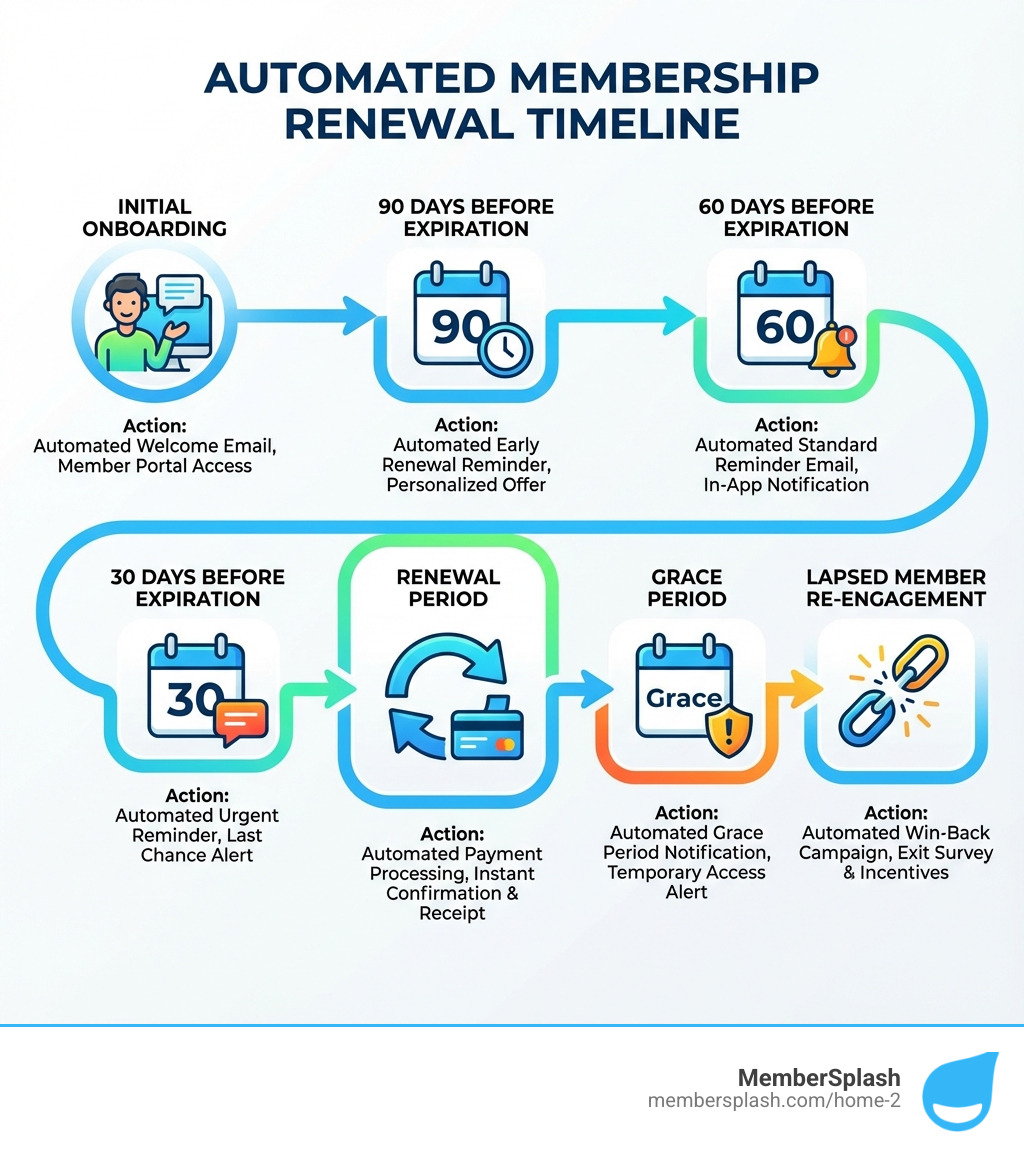
Effective communication is the backbone of successful membership retention, and automation lifts it to an art form. An automated system allows us to set up sophisticated sequences of reminders and messages that go out at predetermined intervals.
These can include:
- Pre-renewal notices: Gentle nudges sent well in advance (e.g., 90, 60, 30 days out) to inform members their renewal is approaching and to highlight the value of their membership.
- Renewal notices: Clear calls to action sent as the renewal date arrives, with easy links to renew.
- Grace period reminders: Messages sent during a specified period after expiration, offering a final chance to renew before membership benefits are fully suspended.
- Lapsed member campaigns: Targeted communications aimed at re-engaging members who have not renewed, perhaps with special offers or a reminder of what they’re missing.
These communications aren’t just generic blasts; they can be personalized with the member’s name, membership type, and direct links to their renewal portal. This level of customization makes members feel seen and valued, increasing the likelihood of renewal. We can easily configure these email sequences, ensuring the right message reaches the right member at the right time. Learn about bulk email features
Recurring Payments and Online Portals
The convenience of modern life often revolves around recurring payments, and membership renewals are no exception. A core component of an automated system is the ability to offer secure, recurring payment options. Members can simply set it and forget it, knowing their membership will automatically renew without interruption. This provides a frictionless experience for them and a steady, predictable revenue stream for your organization.
Alongside recurring payments, online portals are indispensable. These self-service hubs empower members to:
- Update payment information: Easily change credit card details if they expire or are updated.
- View invoices and payment history: Access their financial records at any time.
- Manage their membership: Review their membership type, expiration date, and other relevant details.
These portals reduce administrative calls and emails, as members can find answers and manage their accounts independently. They provide a secure payment processing environment, giving members confidence in their transactions. Explore online payment processing
Here’s a quick comparison of manual vs. automated payment workflows:
| Feature | Manual Invoice Workflow | Automated Recurring Payment Workflow |
|---|---|---|
| Member Action Required | Receive invoice, remember to pay, send check/go online | Opt-in once, payment automatically processed |
| Payment Method | Checks, manual online payments, cash | Credit card, digital wallet (auto-charge) |
| Reminders | Manual calls/emails, paper notices | Automated email/SMS sequences |
| Staff Effort | High (printing, mailing, data entry, chasing) | Low (initial setup, monitoring) |
| Error Rate | Higher (typos, missed payments) | Lower (system-driven) |
| Revenue Predictability | Low | High |
| Member Experience | Potentially clunky, forgettable | Seamless, convenient, uninterrupted |
A Centralized Member Database
The foundation of any successful automated membership system is a robust, centralized member database. This isn’t just a fancy spreadsheet; it’s a dynamic repository that holds all critical information about your members in one secure location.
A centralized database ensures a “single source of truth,” meaning everyone on your team accesses the same, up-to-date information. This eliminates discrepancies and errors that often plague fragmented data across multiple systems or spreadsheets.
Key data points managed in such a database include:
- Contact information: Names, addresses, phone numbers, email addresses.
- Membership history: Join date, renewal dates, membership type, payment history.
- Membership status: Active, pending, lapsed, grace period.
- Engagement tracking: Records of event attendance, volunteer activities, communications received.
Having all this information consolidated allows for powerful segmentation and personalization, which we’ll discuss further. It provides the essential data needed for targeted communications, effective reporting, and a holistic view of each member’s journey with your organization. This is crucial for understanding your community and tailoring your offerings to their needs. Benefits of a central member database
Your Step-by-Step Guide to Implementing Automated Membership Renewals
Implementing automated membership renewals might seem like a big undertaking, but with a clear strategy and the right tools, it’s a manageable and incredibly rewarding process. We’re here to guide you through it.
Step 1: Map Your Current Renewal Process and Set Goals
Before you can automate, you need to understand what you’re currently doing.
- Identify pain points: Where are the bottlenecks in your manual process? Is it chasing payments, updating spreadsheets, or dealing with forgotten renewals? Pinpointing these will highlight where automation will have the biggest impact.
- Define success metrics: What do you hope to achieve? Higher renewal rates? Reduced administrative hours? Improved cash flow? Quantify these goals so you can measure your success. For example, aim to increase your renewal rate by a specific percentage or reduce staff time spent on renewals by a defined number of hours.
- Choose a timeline: Set realistic expectations for when you want to research, implement, and launch your new system.
Step 2: Choose the Right Membership Management Software
This is perhaps the most critical step. Selecting the right software is like choosing the right foundation for your club’s future. For organizations like swim clubs, HOAs, and pool management companies in our area, a system that understands your unique needs is essential. We recommend looking for the following features:
- Comprehensive Member Management: Tracks memberships, payments, and renewals efficiently.
- Online Payment Processing: Securely handles credit card transactions and recurring payments.
- Automated Communication Tools: Enables scheduled email and SMS reminders.
- Self-Service Member Portal: Allows members to manage their own profiles and payments.
- Access Control Integration: If applicable for your facility, integrates with check-in and access systems.
- Event Management: Streamlines event registration and communication.
- Reporting and Analytics: Provides insights into membership trends and financial data.
- Customization and Scalability: The ability to tailor the platform to your specific rules and grow with your organization.
- Security: Robust measures to protect member data and financial information.
- User-Friendly Interface: Easy for both staff and members to steer.
- Dedicated Support: Access to assistance when you need it.
When evaluating options, consider how well the software can handle complex pricing structures, seasonal memberships, and guest tracking—features particularly important for local clubs and HOAs in communities around Annapolis and Baltimore.
Step 3: Configure Your Automation Workflows
Once you’ve chosen your software, it’s time to set up the automation. This involves customizing the system to fit your organization’s specific renewal policies.
- Set reminder intervals: Decide when and how often members will receive renewal reminders. A common strategy is to send notices at 90, 60, 30, and 7 days before expiration, followed by reminders during a grace period.
- Customize email templates: Craft clear, compelling, and personalized messages. Include direct links to the renewal portal and highlight the benefits of continued membership. Remember to test these emails thoroughly to ensure they look good on all devices and that links are working correctly.
- Configure payment options: Set up recurring payment options, define pricing for different membership tiers, and ensure your payment gateway is integrated and secure.
- Define grace periods: Determine how long members have to renew after their official expiration date before their benefits are suspended. Configure automated reminders for this period as well.
Step 4: Communicate the Change and Go Live
The final stage is rolling out your new automated system. This requires clear communication to your members to ensure a smooth transition.
- Inform members of the new process: Send out an announcement explaining the benefits of the new system (e.g., easier renewal, uninterrupted service).
- Provide clear instructions: Offer a simple guide on how to use the new member portal, update payment information, or opt into auto-renewal.
- Offer support: Designate a point person or team to answer questions and assist members during the transition.
- Monitor the initial launch: Keep a close eye on renewal rates, payment processing, and member feedback immediately after launch. Be prepared to address any unexpected issues quickly.
- Send test emails: Before fully launching automated reminders, send test emails to yourself and a few trusted colleagues to confirm everything is working as intended.
Optimizing Your Strategy and Overcoming Challenges
Even with a fully automated system, the work isn’t entirely done. To truly maximize the benefits of automated membership renewals, we need to continuously optimize our strategy and be prepared to address potential challenges. This involves leveraging data, personalizing communications, and understanding the legal landscape.
Using Data to Refine Your Approach
Data is your secret weapon for fine-tuning your renewal strategy. A good membership management system will provide robust reporting tools that give us invaluable insights.
- Track renewal rates: Monitor overall renewal percentages and segment them by membership type, tenure, or other demographics to identify trends.
- Analyze member behavior: Look at who is renewing, when they’re renewing, and which communications are most effective. Are members engaging with your emails? Are they clicking the renewal links?
- A/B test communications: Experiment with different subject lines, email content, and call-to-actions to see what resonates best with your members. Small tweaks can lead to significant improvements in renewal rates.
- Identify at-risk members: Data can help us spot members who might be disengaging or are less likely to renew. Perhaps they haven’t attended an event recently, or their login activity has decreased. This allows for proactive, targeted outreach to re-engage them before they lapse.
Regularly reviewing these reports and using the insights to fine-tune your automation strategy ensures your system is always performing at its best. We can gain a clearer understanding of what works and what doesn’t, allowing us to allocate resources more effectively for retention efforts. Learn about custom reporting tools
Personalization and Flexible Options
While automation handles the mechanics, personalization ensures the human touch. Generic communications can feel cold; custom messages foster connection.
- Segmented messaging: Divide your members into groups based on their interests, membership history, or engagement levels. Send different messages to long-term members versus new members, or to members who prefer certain activities.
- Tiered membership offers: Use automation to present options for different membership levels during renewal. Some members might be ready to upgrade, while others might appreciate a more affordable downgrade path if their circumstances change. Providing downgrade paths can ensure that these members still find value in staying connected with your organization, albeit at a lower tier, preventing complete churn.
- Celebrate milestones: Automated systems can trigger personalized messages for membership anniversaries or other milestones, making members feel appreciated and strengthening their bond with your community.
By customizing automated renewal communications, we improve their effectiveness and demonstrate our commitment to each member’s unique experience.
Addressing Common Challenges
Even the best automated systems can encounter bumps in the road. Being prepared for common challenges is key to maintaining a smooth renewal process.
- Failed payments: Credit cards expire, get lost, or are replaced. A robust system should have dunning management features that automatically retry failed payments and notify members immediately.
- Expired credit cards: Automated reminders can prompt members to update their payment information before their card expires, preventing a lapse in membership.
- Legal compliance with auto-renewal laws: It’s crucial to understand state-specific laws regarding auto-renewal. In the US, some states have specific requirements for clear disclosure, consent, and cancellation procedures for automatically renewing subscriptions. Ensure your terms of service and communications clearly outline your auto-renewal policies and provide easy ways for members to manage or cancel their subscriptions. This is particularly important for organizations operating in Annapolis, Baltimore, and other parts of Maryland. We must ensure our processes are transparent and compliant.
By proactively addressing these potential issues, we can maintain high renewal rates and a positive member experience.
Frequently Asked Questions about Automated Renewals
How far in advance should we send renewal reminders?
Best practice suggests a sequence starting 60-90 days before expiration, with increasing frequency as the date approaches, including reminders during a grace period. This catches both early planners and last-minute renewers.
What happens if an automated payment fails?
A good system includes a dunning management process. It should automatically retry the payment, notify the member of the failure via email, and provide a direct link for them to update their payment information in a secure portal.
Can we still accept manual payments like checks?
Yes. A flexible membership management platform should allow you to manually record offline payments (check, cash) for a member, which then updates their status and stops any further automated “overdue” reminders for that cycle.
Conclusion: Make Every Renewal a Success
We’ve explored the profound difference automated membership renewals can make for your organization. From escaping the manual grind and its associated costs to significantly boosting member retention and engagement, automation is not just a convenience—it’s a strategic imperative for modern club and community management.
By implementing a system with core components like automated communications, recurring payments, online portals, and a centralized database, you empower your staff, delight your members, and secure your financial future. We can transform administrative burdens into opportunities for growth and deeper member connection.
The future of club management is efficient, member-centric, and automated. By embracing these changes, we ensure every renewal is a success, contributing to a vibrant, thriving community for years to come. MemberSplash is dedicated to providing solutions that simplify your operations and improve your members’ experience.